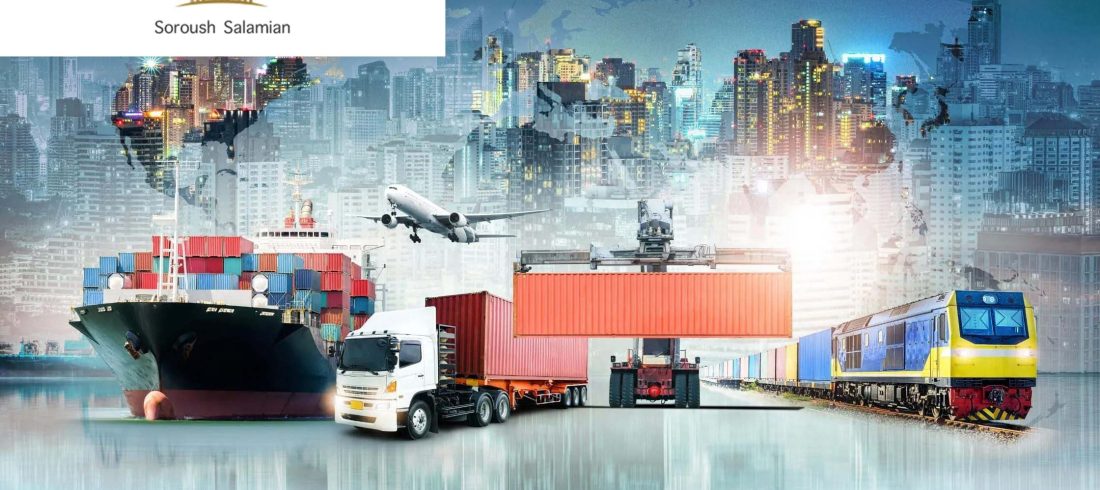
Types of Maritime Transportation Contracts
Maritime transportation is one of the most fundamental methods of transporting goods. Ships are capable of carrying various types of cargo in different sizes and weights and are not subject to the limitations faced by trucks or aircraft. For this reason, specific mechanisms have been established to regulate such exchanges, among which transportation contracts play a central role.
Important Legal Considerations in Drafting Maritime Transportation Contracts
Maritime Contracts
Before becoming familiar with the various types of maritime contracts, it is necessary to understand the nature of these instruments.
A maritime transportation contract is a legal document concluded between the parties to the carriage of goods by sea. Under such a contract, one party undertakes to transport goods from one location to another.
These contracts are usually prepared in multiple copies and distributed among the parties involved in the transportation process.
Parties generally draft such contracts to prevent issues that may arise before or during the transportation of goods. Common problems include the following:
- Breakage or damage to goods during transportation.
- Spoilage of perishable goods.
- Loss of cargo.
- Theft of goods.
- Delivery of goods to an incorrect destination.
- Delays in delivery.
The purpose of concluding these contracts is to mitigate such risks and to ensure the integrity of the goods. These documents constitute guarantees between the parties and provide a legal basis for recourse to the courts in the event of a dispute.
Maritime transportation contracts exist in various forms. However, when limited to contracts concluded between the sender and the recipient of goods, they may be classified as follows:
- Charter party agreements.
- Bills of lading.
- Special-purpose contracts.
- Insurance contracts.
Charter Party Agreements
One of the principal types of maritime transportation contracts is the charter party agreement. These agreements are concluded between a shipowner and another individual or company, allowing the vessel to be used by the charterer for the carriage of goods. As such, the contract’s limited duration is an inherent characteristic.
The parties must agree on all contractual terms and sign the agreement. In the case of corporate parties, the agreement is also affixed with the company seal.
A copy of the executed contract is provided to each party. Under standard charter party agreements, the cargo, crew, equipment, and all items aboard the vessel are placed at the disposal of the charterer, who is obligated to return them in proper condition. If the charterer does not require the crew, this must be expressly stated in the contract.
Key information commonly included in charter party agreements includes the following:
- Details of the shipowner and the charterer.
- Name of the vessel.
- Technical specifications of the vessel.
- Cargo capacity.
- Description and quantity of the cargo.
- Ports or locations of loading and discharge.
- Freight rate, time, and place.
- Currency and method of payment of hire or freight.
- Permissible time for loading and unloading.
Such agreements may be concluded on a voyage basis or for a specified period of time.
Bills of Lading
Maritime bills of lading constitute another form of transportation contract. These documents evidence ownership of the goods rather than ownership of the vessel. Depending on operational requirements, various types of bills of lading are issued between maritime transport companies and the carrier or shipowner, specifying the conditions under which the goods must be carried during the voyage.
Almost all information contained in a bill of lading is directly related to the cargo. The most essential details include the names of the shipper and the consignee. Additional information commonly stated includes the carrier’s name, number of packages, list of goods shipped, cargo volume, payment terms, transportation class for each package, special handling instructions, and freight rates and charges.
Special Purpose Contracts
In certain cases, cargo transportation cannot be carried out under standard conditions. For example, when the parties intend to transport hazardous chemical materials, special contractual arrangements are required. In such circumstances, the parties must conclude a special-purpose contract and expressly stipulate the relevant terms and conditions governing the transportation.
Insurance Contracts
Insurance is another essential element that helps ensure the safety of goods during maritime transportation. Almost all lawful goods are eligible for insurance coverage. Accordingly, insurance is considered one of the most important components of maritime transportation contracts, as it significantly reduces the risk of cargo loss or damage during the voyage.
Frequently Asked Questions Regarding Types of Maritime Transportation Contracts
A maritime transportation contract is a legal document concluded between the shipper and the carrier to safeguard the goods throughout the voyage. It defines the terms of carriage, as well as the rights and obligations of the parties, and enables legal recourse in the event of damage, loss, or other disputes.
In a charter party agreement, the shipowner places the vessel at the disposal of the charterer for a specified period or voyage. Essential terms include the vessel’s specifications, cargo capacity, type of goods, loading and discharge ports, duration, and method of payment of freight or hire.
A maritime bill of lading is a document evidencing ownership of the goods rather than ownership of the vessel. It includes information such as the names of the shipper and consignee, the number of packages, the description of goods, the cargo volume, the payment terms, and any special handling instructions.
Special-purpose contracts are used when the transportation of goods falls outside standard conditions, such as the carriage of hazardous materials or specialized cargo. In such cases, the specific requirements and obligations must be expressly set out in the contract.
Insurance is one of the most important aspects of maritime transportation, as it provides protection against loss or damage to goods during the voyage. Most lawful goods are insurable, and insurance coverage significantly reduces the financial risks associated with maritime transport. What is a maritime transportation contract, and what is its purpose?
What are the main features of a charter party agreement?
What is the function of a maritime bill of lading?
When are special-purpose contracts used in maritime transportation?
Why is insurance important in maritime transportation contracts?