
What right does the carrier have to retain the goods?
The right to retain the goods is one of the key points in transport contract relationships; it can enable a carrier to refuse delivery. This right is usually exercised when the carrier has claims arising from the transport services carried out, the freight charges, any extra expenses, or other costs connected with the transportation of the goods, and when the necessary legal and contractual conditions for exercising that right are met.
Under Iranian law, the right of retention generally refers to the temporary refusal to perform an obligation until the corresponding obligation has been fulfilled. However, in transportation agreements, a distinction must be made between a valid right of retention and an unlawful refusal to deliver goods.
A carrier cannot take possession of the goods or refuse to carry them solely because of a financial dispute.
In order to assess whether this right can be exercised, it is necessary to examine the transportation agreement, the bill of lading, the standard transportation terms, the amount of debt, the relationship between the debt and the particular goods, and the relevant regulations.
In the field of international transport, the governing law, the terms of the agreement, the bill of lading, and the relevant conventions are all of great importance; the right to retain goods therefore constitutes a limited and conditional legal remedy and must be exercised in light of the particular documents and circumstances involved in each case.
The Legal Basis of the Right to Retain Goods in Transportation Agreements
The general principles of contract law and the particular regulations concerning transportation must be used to examine the legal basis of the right to retain goods in Iran.
Article 377 of Iranian civil law does provide for the right of retention in sales contracts, but it does not extend to transportation agreements. It therefore cannot be deduced from this article alone that a carrier has the right to retain the goods in all cases.
In any transportation agreements the parties’ obligations, the conditions regarding payment for the freight, the responsibilities of the carrier and the methods of delivery are of fundamental importance, and the agreement or the standard transport terms may include the right to retain the goods in relation to particular claims.
The contractual terms should also be examined together with the commercial and transport regulations; in the case of international transport, the laws of the place of delivery, the governing law of the agreement, and the applicable conventions may influence the outcome.
To determine the legal basis of the right of retention, it is first necessary to establish the kind of agreement and the legal relationship between the parties, then to examine the transportation documents and the relevant regulations.
The fact that the “right of retention” is mentioned is not enough to provide a basis for retaining the goods.
Can a carrier refuse to deliver the goods to obtain payment of freight?
It all depends on the agreement, the applicable law, and the circumstances that lead to the claim.
In some transportation arrangements a carrier or a person who has the goods may have certain rights as to the payment of freight charges or expenses connected with the goods.
That does not imply that the carrier has the right to hold on to the goods for any kind of debt.
For instance, it has to be established whether the claim refers to the same shipment or is based on a separate financial relationship between the parties.
It also needs to be determined whether the freight payment is the responsibility of the consignor, the consignee, or another party, and what conditions are set out in the bill of lading.
If a carrier refuses to carry out the delivery without having a contractual or legal reason, it could be held liable in the form of a breach of contract, compensation for delays, or liability resulting from the unlawful retention of the goods.

Before exercising the right of retention, the transportation documents and the contractual terms should be carefully gone over.
The best method is for the carrier to record the amount of the claim, the legal grounds for the claim, and the link between the claim and the goods, without taking any unilateral action until proper legal advice has been obtained.
The Difference Between the Right to Retain Goods and Legal Seizure
The right to keep goods and the legal power to seize them are two distinct legal concepts and must not be regarded as the same.
If the conditions in question are met, the right of retention may enable an individual to withhold the performance of an obligation until the relevant obligation has been fulfilled.
On the other hand, legal seizure is usually carried out in accordance with a legal order or a procedure laid down by law, by an appropriate authority.
The fact that a carrier has the goods in his possession does not mean that he automatically has the legal authority to seize them simply because he has physical control.
When a dispute has reached the point where actions such as securing a claim, seizing assets, or initiating enforcement proceedings are necessary, the appropriate legal procedures must be followed.
It is very important in practice to make this distinction, since using the term ‘seizure’ may lead to different legal consequences when compared with the concept of ‘retention of goods’, and inadequate action may result in liability.
The right of retention is usually intended to secure a claim arising from the performance of a contract and must not be used to exert undue pressure on the other party.
The carrier should first establish the legal basis for its action and, if there is a serious dispute, ought to seek legal advice or consider going through formal dispute resolution procedures.
The Role of the Bill of Lading in Proving the Right to Retain Goods
One of the most important documents in the field of transportation is the bill of lading, and it can contain essential details about the parties concerned, the goods, the route, the terms of transportation, and the relevant responsibilities.
When evaluating the right to keep the goods, the bill of lading can be significant in establishing the parties’ contractual relationships and obligations.
The bill of lading by itself does not always prove the existence of a right of retention; its terms have to be examined in conjunction with the main transportation agreement, the carrier’s standard terms, the invoices, the payment records, and any other pertinent documents.
For instance, if the transport documents state that the consignee is to pay the freight charges at the destination, this could affect the legal analysis of the parties’ relationship.
Similarly, specific provisions concerning additional expenses or the method of delivery may also be important.
In international transport, different legal frameworks may govern transport documents, and the applicable law must also be determined.

That is why anyone who wishes to claim the right of retention must keep all documents related to the claim.
If a dispute ever arises, accurate records of the amount owed, the due date, the correspondence, and the delivery status will be important.
Does the right to retain goods apply to all goods which are held by a carrier?
Not necessarily.
An important factor when exercising the right of retention is the relationship between the goods and the debt which is in question.
The mere fact that a carrier has certain goods does not mean that he can keep them to satisfy any claim which he has against the owner of the goods or against the contracting party.
For instance, where a transport company has carried out several individual consignments for the same customer, and one of those consignments has a particular outstanding debt, it is necessary to evaluate whether other goods can be retained to recover that debt in accordance with the agreement and the relevant law.
This is especially significant in cases involving ongoing commercial relationships, since the parties may have multiple contracts and financial accounts simultaneously.
It is possible to avoid future disputes by separating out each shipment and correctly recording the associated costs.
The carrier should also take into account who owns the goods, since they may belong to someone other than the debtor or a third party may have rights in respect of them.
Under such circumstances, failing to verify ownership status when exercising the right of retention could pose legal risks.
It is therefore necessary to separately examine the agreement, the transportation documents, the ownership status and the origin of the claim before retaining the goods.
Carrier Liability for Unlawful Retention of Goods
If the carrier refuses to take delivery of the goods without a valid legal or contractual reason, it could be held liable for damages resulting from that refusal.
The kind of liability and how much liability will depend on the law that applies, the terms of the contract, and the circumstances of the case. The owner of the goods might suffer financial losses if there is a delay in delivery; for instance, the goods could be perishable, their sales deadline could pass, or further storage might result in extra costs. In certain instances, a delay might also lead to the loss of a commercial contract. On the contrary, the carrier is still required to exercise reasonable care with regard to the goods which it has in its possession. The fact that it holds the goods as a result of a financial dispute does not remove its duty to preserve them.
It would therefore be advisable for a carrier who wishes to exercise its right of retention to formally notify the other party, draw up a record of the claim, and state the amount of the demand together with the grounds for it. If you refuse delivery without first conducting a proper legal assessment, the cost of the dispute may increase. In complicated situations, it may be advisable to review the agreement and seek legal advice before taking any action to avoid incurring further liabilities.
The Right to Retain Goods in International Transportation
In the case of international transport, the question of the right to retain goods becomes more complicated, since many legal systems can apply to a single transport relationship. The rights and obligations of the parties may be influenced by the countries of origin and destination, the carrier’s business location, the governing law of the agreement, and applicable international conventions. A carrier cannot simply decide to keep the goods on the grounds of the domestic law of its own country; it is first necessary to establish which law applies to the agreement and whether an international convention applies to that mode of transport.
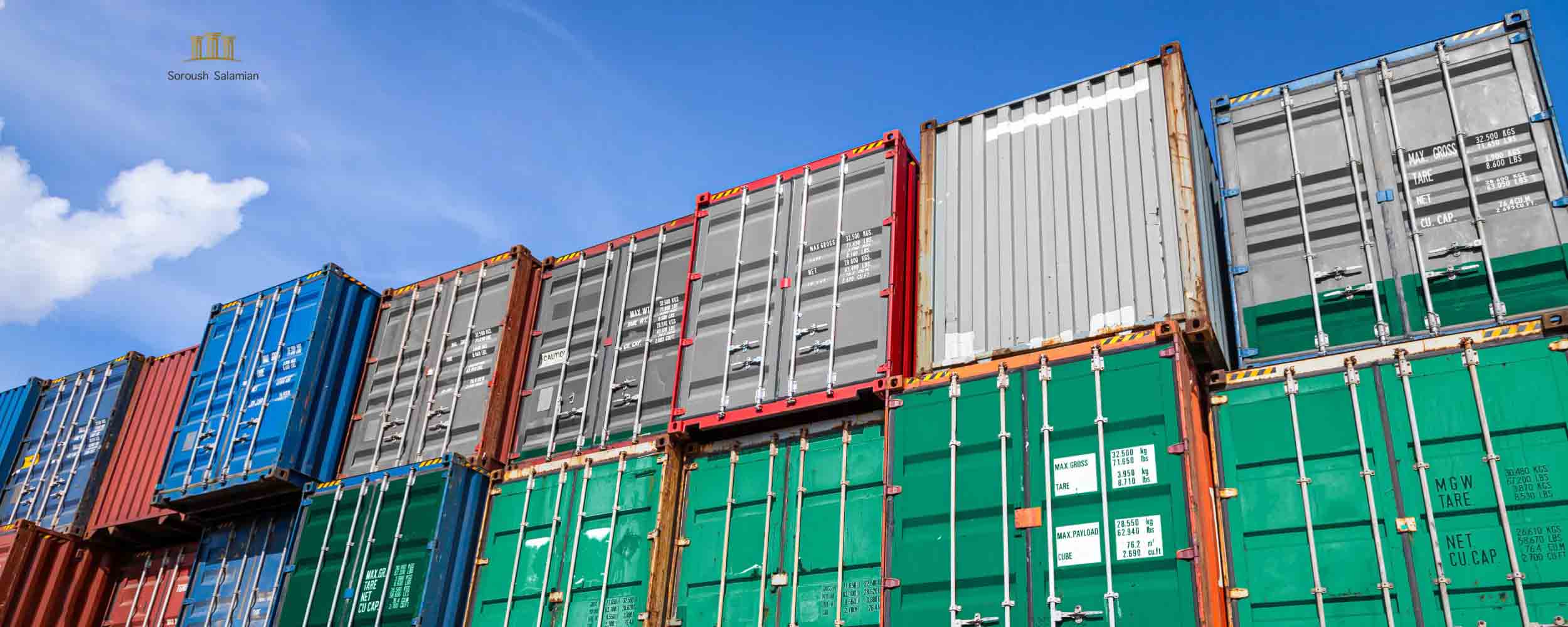
The mode of transport is also a factor; road, sea, air, and rail transport may each be governed by different legal regulations. Moreover, the terms outlined in the bill of lading and the transportation agreement may influence parties’ rights. It is important to examine the origin of the claim, the party responsible for payment, the owner of the goods, and the place of delivery. It therefore follows that in the case of international transport, the right to hold goods without examining the applicable law could result in substantial legal risks. Taking action should be based on a fully documented agreement and subject to special legal review, as this is a more reliable way to handle such disputes.
What measures can be taken to prevent disputes over the right to retain goods?
The general approach to preventing disputes starts when the transportation agreement is being prepared. The agreement must state which party is to pay for the freight, any extra expenses and other costs, as well as the procedures to be followed if payment is delayed.
It is very important to have clear payment terms: the freight amounts, the payment due dates, the currency to be used for international transport, any extra costs, and the responsibility for payment should all be clearly stated in the appropriate documents. It is also important to record the condition of the goods when they are handed over to the carrier and when they arrive at their destination, as this can help establish who is responsible if there is a dispute over damage or delay. The communications between the two parties should also be kept. When the carrier states that an amount is due, the invoice, the documents supporting the expense, and the payment deadline must be clearly stated.
To keep goods due to non-payment, it may be helpful to inform the concerned party to avoid misunderstandings. It is especially important, when it comes to international agreements, to specify the governing law and the method for resolving disputes. The clearer the obligations and the method of payment are, the less likely it is that disputes about the right to retain the goods will arise; the clearer the parties are, the clearer the way of resolving them.
Important Points for Carriers Before Exercising the Right to Retain Goods
The right to keep goods constitutes a legal and contractual choice; before exercising this right, a carrier should carefully consider several issues.
The first thing the carrier should do is establish that its claim is legally enforceable, supported by documentation, and valid, and that the agreement or relevant law provides a valid reason for refusing delivery.
The most important issues to review include:
- The transportation agreement and the standard contractual conditions.
- The information and circumstances set out in the bill of lading.
- Finding out which party is responsible for paying the freight charges.
- The precise figure of the claim and the date on which it is due.
- The relationship between the statement and the particular shipment.
- The ownership of the goods and the rights which third parties may have.
- The law that governs the agreement.
- The international regulations or conventions relating to transportation.
- The condition of the goods and storage expenses.
- The possibility of damage caused by a delayed delivery.
- The letters and official communications exchanged between the two parties.
- The possibility of using methods of alternative dispute resolution.
If it is unclear what the legal basis is for the right of retention, the carrier may be liable for retaining the goods.
In domestic matters and particularly in international transportation cases, reviewing documents with the assistance of a transportation law professional before taking action can reduce the risk of disputes and damages.
Frequently Asked Questions About the Carrier’s Right to Retain Goods
The carrier’s right to retain goods refers to circumstances in which a carrier may, based on a valid legal or contractual basis, refuse delivery of goods until specified claims are paid. This right is not absolute and must be assessed based on the agreement, bill of lading, governing law, and the connection between the claim and the shipment.
This depends on the contractual terms and applicable regulations. It must be determined who is responsible for payment, whether the claim relates to the same shipment, and whether the agreement or law allows retention of goods. Refusing delivery without a valid basis may result in carrier liability.
The right to retain goods and legal seizure are different concepts. The right of retention may, under specific conditions, permit temporary refusal of delivery, while competent authorities generally carry out legal seizure in accordance with legal procedures. A carrier does not have judicial seizure authority merely because it possesses the goods.
Not necessarily. The agreement and applicable law must be reviewed to determine whether the claim relates to the specific shipment. If there are multiple contracts or separate shipments, goods cannot be retained to recover a particular debt without a legal or contractual basis. Ownership rights and third-party interests must also be considered.
The carrier should review the transportation agreement and bill of lading, amount and due date of the claim, responsible party for payment, connection between the debt and the shipment, ownership status of the goods, governing law, and applicable international transportation regulations. Proper documentation of the claim and formal notification to the other party are also important. In complex cases, legal review is recommended. What is the carrier’s right to retain goods?
Can a carrier refuse delivery of goods due to unpaid freight charges?
What is the difference between the right to retain goods and legal seizure?
Does the carrier’s right to retain goods apply to all goods belonging to a customer?
What should a carrier review before exercising the right to retain goods?




Can a carrier refuse to release my goods if I only dispute part of the freight invoice?
Whether a carrier can retain the goods during a payment dispute depends on the applicable law, the contract terms, and the nature of the disputed amount. A carrier’s right to retain goods is not unlimited, so the specific circumstances should be reviewed carefully.
Does the carrier have the right to keep the goods if the buyer has not paid the seller, but the transport fee was already paid?
Generally, a carrier’s retention rights are connected to unpaid amounts owed to the carrier, such as freight or related charges, rather than every financial dispute between other parties. The contracts between the parties and the governing law would determine whether such a right exists.
Can a carrier sell the goods if the owner does not pay the shipping charges?
The right to retain goods and the right to sell goods are separate legal issues. In some jurisdictions, additional legal procedures may be required before goods can be sold. The carrier must follow the applicable rules and cannot simply dispose of cargo without legal authority.
If my goods are being held by a carrier, can I take legal action to get them released?
Depending on the circumstances, a party may have legal options to challenge the retention of goods or seek their release. The available remedies depend on factors such as the contract, the amount claimed, and the law governing the transportation agreement.
Does a carrier’s right to retain goods apply the same way in every country?
No, retention rights can vary significantly between jurisdictions. International transportation may involve different national laws, conventions, and contractual provisions. The location of the shipment and the type of transportation are important factors.
If the carrier made a mistake and delayed delivery, can they still keep the goods until payment?
A carrier’s own conduct may be relevant when evaluating whether retention of goods is justified. The legal position can depend on the reason for the delay, the payment dispute, and the applicable legal rules. A detailed review would be needed to assess the situation.
Can a carrier hold all of my company’s shipments because of an unpaid invoice from one shipment?
This depends on the contract and the applicable law. Some legal systems may recognize broader retention rights in certain situations, while others may limit them to specific goods or specific charges. The wording of the agreement is often very important.
What documents usually decide whether a carrier can keep the cargo?
Documents such as the contract of carriage, bill of lading, invoices, and applicable transportation terms can be important. These documents help determine the parties’ obligations and whether the carrier has a valid basis for retaining possession.
If the goods are damaged while the carrier is holding them, who is responsible?
A carrier that keeps possession of goods may still have obligations regarding their care and protection. Responsibility for damage would depend on the circumstances, including how the goods were handled, the cause of the damage, and the applicable liability rules.
Can a carrier put a lien clause in the contract that gives them unlimited rights over the goods?
Contract clauses can define certain rights and responsibilities, but their enforceability depends on applicable law. Some jurisdictions may restrict clauses that create excessive or unreasonable rights. The exact wording of the clause and the governing law should be examined.