
The Concept of General Average and Its Difference from Particular Average
General Average is an important concept in maritime transportation law. It arises when, in order to preserve the safety of a maritime voyage, certain costs or losses are intentionally and reasonably incurred. In such circumstances, the loss created to save the entire maritime venture, including the vessel, cargo, and other interests involved in the voyage, is not borne by a single party but is distributed among the stakeholders.
For example, if a vessel, under emergency circumstances, must jettison part of its cargo to prevent sinking or incurs extraordinary expenses to reach a safe port, those costs may fall within the scope of General Average.
Article 184 of Iranian Maritime Law divides maritime losses into two categories: General Average and Particular Average. Article 185 defines General Average as extraordinary expenses and losses intentionally incurred to preserve the vessel, passengers, and cargo. The main distinction between General Average and Particular Average is how costs are allocated. In Particular Average, the owner of the affected cargo or property generally bears the loss, whereas in General Average, the expenses are distributed among all parties who benefited from preserving the vessel and cargo.
What Conditions Create General Average in Maritime Transportation?
Not every incident occurring at sea automatically results in General Average. For a loss or expense to qualify as General Average, certain requirements must be met. The most important requirement is that the action taken must have been taken to protect the common interests of all parties involved in the maritime voyage. The main conditions for establishing General Average include:
- An actual and serious danger to the vessel, crew, or cargo.
- Taking a deliberate action to prevent a greater loss.
- The reasonableness of the action considering the circumstances of the incident.
- A direct connection between the action taken and preserving the maritime venture.
For example, if the master of a vessel decides during a severe storm to discharge part of the cargo in order to maintain the vessel’s stability and prevent sinking, such an action may qualify as General Average. Under international regulations, particularly the York-Antwerp Rules, it is emphasized that a General Average act must be carried out for the common safety and preservation of property during a common maritime adventure. Therefore, expenses incurred solely for one party’s benefit or due to one party’s negligence generally do not fall within the scope of General Average.
Common Examples of General Average in Maritime Cargo Transportation
In maritime cargo operations, various situations may lead to General Average. Many of these situations occur when continuation of the voyage is not possible without taking emergency measures. Common examples include:
- Jettisoning part of the cargo into the sea to maintain vessel stability.
- Emergency repair expenses incurred at a port of refuge.
- Costs of unloading and reloading cargo in order to perform necessary repairs.
- Expenses related to vessel salvage operations in emergency situations.
- Damage caused to vessel equipment to prevent a larger incident.
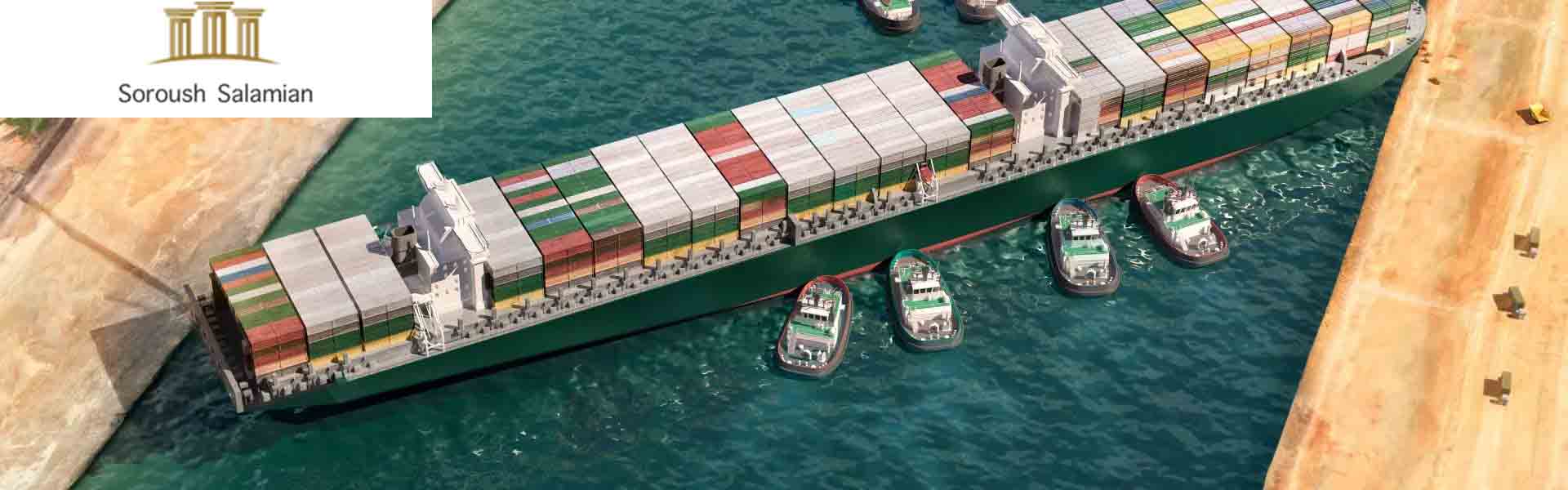
For example, imagine a vessel carrying multiple types of cargo experiences a serious engine failure during its voyage and must stop at an emergency port to prevent further damage. The extraordinary expenses arising from such action may, subject to the applicable legal requirements, be considered part of General Average. However, determining whether a specific expense qualifies as General Average requires assessing the incident’s circumstances, the carriage contract, technical reports, and applicable regulations. In practice, General Average adjusters play a key role in examining these matters.
How Is General Average Calculated?
General Average is calculated through a specialized process usually conducted by General Average adjusters. This process determines the amount of admissible loss and identifies each stakeholder’s contribution share in covering the expenses. Several factors are generally considered when calculating General Average, including:
- The vessel’s value at the end of the voyage.
- The value of the preserved cargo.
- The amount of extraordinary expenses incurred.
- The value of different cargo interests.
- The extent of damage caused to the property.
After determining the final amount of General Average, the total amount is distributed among the parties who have benefited from the salvage and preservation measures. Generally, the shipowner, cargo owners, and other interested parties contribute proportionally based on the value of their preserved interests.
Article 187 of the Iranian Maritime Law provides that General Average cases, the method of determination, proportional contribution, and the calculation procedure shall be determined by specific agreements and, in the absence of such agreements, according to regulations established on the basis of international rules and practices. In many maritime carriage contracts, the York-Antwerp Rules are also incorporated as the framework for calculating General Average in order to prevent disputes.
The Role of the York Antwerp Rules in Determining General Average
The York-Antwerp Rules are among the most important international sources for determining the treatment of General Average in maritime law. These rules establish principles that determine which expenses may be accepted in emergency maritime situations and how those expenses should be distributed among the different parties.
These rules do not constitute the direct law of any specific country; however, they are widely incorporated into maritime carriage contracts, insurance policies, and bills of lading. These rules are widely used because they provide a common framework for resolving disputes between shipowners, cargo owners, and insurers. According to these principles, the mere occurrence of damage is not sufficient. The action taken must:
- Be taken to preserve common interests.
- Be carried out in circumstances involving an actual danger.
- Constitute a reasonable and necessary measure to prevent a greater loss.
The use of the York-Antwerp Rules enables the parties to understand, before any dispute arises, how emergency expenses will be assessed. This is particularly important in international maritime transportation, where multiple legal systems are often involved.
Responsibilities of the Shipowner, Cargo Owner, and Insurer in General Average
In General Average, the responsibility for payment does not rest solely with the shipowner or any single party. The fundamental principle is the fair distribution of expenses among those who benefited from the saving measures. The shipowner is generally responsible for providing information regarding the incident, cooperating in the assessment process, and fulfilling contractual obligations. The cargo owner must also provide necessary information regarding the value of the cargo and related shipment documents.
Insurance companies also play an important role in this process. Many marine insurance policies cover expenses related to General Average and, where the insurance conditions are satisfied, insurers assume part of the financial obligations. In practice, disputes often arise when a party does not accept the actual value of the cargo, the contractual terms, or the necessity of the incurred expenses. Therefore, maintaining accurate shipping documents, bills of lading, insurance policies, and incident reports is important.
The Position of General Average in Iranian Maritime Law
Iranian law recognizes General Average. In the chapter on maritime losses, Iranian Maritime Law distinguishes between General Average and Particular Average and establishes the general framework governing this subject. Under Article 185 of the Iranian Maritime Law, General Average includes extraordinary expenses and losses intentionally incurred to preserve the vessel, passengers, and cargo.
Furthermore, under Article 187, the determination and distribution of General Average may be based on specific agreements. In the absence of such agreements, the process shall be carried out in accordance with regulations based on international rules and practices. Due to the international nature of maritime transportation, many carriage contracts in Iran also refer to the York-Antwerp Rules. This allows internationally accepted frameworks to be applied to assess and allocate General Average.
How to Prevent Disputes Related to General Average?
Disputes concerning General Average usually arise when contracts, shipping documents, or incident reports are incomplete. To reduce such disputes, parties involved in maritime transportation should establish a clear legal framework before commencing the shipment. The most important preventive measures include:
- Preparing a clear carriage contract.
- Specifying the governing law and dispute resolution mechanism.
- Obtaining appropriate marine insurance coverage.
- Maintaining accurate records of the incident.
- Preserving documents related to cargo value and expenses.
In addition, selecting reputable shipping companies and carefully reviewing the terms of bills of lading are highly important. Many disputes become complex when the parties do not clearly understand their obligations or how expenses are allocated. General Average is a specialized subject that combines technical, insurance, and legal issues. Understanding its principles helps cargo owners, shipping companies, and logistics professionals make more accurate decisions when maritime incidents occur.
Frequently Asked Questions About General Average
General Average refers to costs and losses that are intentionally incurred for the preservation of the vessel, cargo, or other interests involved in a maritime voyage and are distributed among the stakeholders.
In Particular Average, the loss is generally related only to the owner of the affected cargo or property, whereas in General Average, the expenses are distributed among all parties who have benefited from the saving measures.
Emergency repair costs, the sacrifice of part of the cargo to save the vessel, expenses related to entering a port of refuge, and certain salvage operation costs may qualify as General Average under specific circumstances.
General Average is calculated based on the value of the vessel, preserved cargo, incurred expenses, and the contribution share of each stakeholder. Specialized General Average adjusters usually conduct the assessment.
Yes. The Iranian Maritime Law addresses maritime losses in Articles 184 to 187 and distinguishes General Average from Particular Average.
The York Antwerp Rules provide an international framework for determining the conditions, assessment, and distribution of General Average and are widely used in maritime carriage contracts.
General Average expenses are generally distributed among the shipowner, cargo owners, and other stakeholders who have benefited from the preservation of their property, according to their determined contribution shares. What is General Average in maritime law?
What is the difference between General Average and Particular Average?
What types of expenses are included in General Average?
How is General Average calculated?
Does Iranian law recognize General Average?
What role do the York Antwerp Rules play in General Average?
Who pays General Average expenses?




If a ship owner declares general average, does that mean the cargo owner has to pay even if their goods were not damaged?
General average contributions can sometimes apply even when a particular cargo was not physically damaged, because the principle is based on sharing certain extraordinary sacrifices or expenses made to protect the overall voyage. The exact responsibility depends on factors such as the applicable contract terms, the governing law, and the circumstances of the incident. A review of the shipping documents would usually be needed to understand the specific situation.
Who decides how much each cargo owner has to contribute? Is there a fixed percentage?
The contribution is generally calculated through a general average adjustment process, usually performed by a specialist known as a general average adjuster. The amount is not a fixed percentage for every case and may depend on the value of the property involved, the losses incurred, and the rules applicable to the shipment.
My company imports products by sea. If there is a general average event, can our insurance refuse to cover the contribution?
Marine insurance policies often address general average contributions, but coverage depends on the wording of the specific policy, exclusions, and the circumstances of the claim. It is important to review the insurance contract carefully rather than assume coverage applies. If there is an active dispute with an insurer, the policy documents and claim details should be examined individually.
Does general average only happen when cargo is thrown into the ocean, or are there other situations too?
Cargo being intentionally sacrificed is one traditional example, but general average can involve other extraordinary measures taken to protect the ship and cargo from a common danger, such as certain emergency expenses or rescue-related actions. Whether a situation qualifies depends on the facts and the applicable legal rules.
If my cargo arrives late because of a general average situation, can I claim damages from the shipping company?
A delay caused by a general average event does not automatically create a right to compensation. The answer may depend on the cause of the delay, the shipping contract, applicable maritime rules, and whether any party was legally responsible for the circumstances. These issues usually require reviewing the relevant documents and facts.
I bought goods from overseas and the seller arranged the shipping. Who is responsible for general average charges, me or the seller?
Responsibility may depend on the terms of sale between the buyer and seller, such as the agreed Incoterms, as well as the shipping and insurance arrangements. The party that owns or has an interest in the cargo may have obligations depending on the circumstances. Reviewing the sales agreement and shipping documents would be necessary to provide a clearer answer.
Can a cargo owner refuse to pay a general average contribution if they think the ship company caused the accident?
A cargo owner’s obligation and any possible challenge can depend on the facts, including the cause of the incident and the governing legal framework. In some situations, issues of fault may affect the parties’ rights and obligations. It is important to review the evidence, contracts, and applicable maritime rules before determining what options may exist.
How long does a general average claim usually take to settle? My shipment has been stuck for months
The timeline can vary significantly depending on the complexity of the incident, the number of parties involved, the investigation process, and the preparation of the adjustment. Some matters can take months or longer to resolve. If a shipment is delayed due to an ongoing general average process, the specific documents and communications would need to be reviewed to understand the available options.
Does general average law work the same way in Iran as it does in Europe or the US?
General average is recognized in many maritime legal systems, but the details can differ depending on the jurisdiction, the contract terms, and the rules incorporated into the shipment documents. International shipping often involves multiple legal systems, so determining which law applies is an important first step.
If a container is damaged during the rescue operation, is that always considered general average?
Not necessarily. Damage that occurs during an emergency response may or may not qualify as a general average sacrifice depending on the circumstances and the applicable maritime rules. The purpose of the action, the necessity of the measure, and the connection between the damage and the common danger are some factors that may be considered. A case-specific review would be needed to assess it properly.