Cross Stuffing in Maritime Transportation
The most common mode of transport for a country’s imports and exports is maritime transport. Various methods are used for transferring goods onto vessels in maritime transport. One of these methods is known as cross-stuffing.
Legal and Customs Requirements Related to Cross-Staffing in Iran
Cross Stuffing
Cross-stuffing is one of the methods used for transporting goods, in which cargo is transferred between different vessels. In this method, a container is moved from one ship to another.
In some cases, cargo within a container may be transferred to another container.
Existing obstacles in export and import operations often drive the use of cross-stuffing. Below, the main reasons for utilizing this method are examined.
Reasons for Using the Cross-Staffing Method
Each transportation method requires an assessment of specific conditions. Before transferring goods, existing circumstances must be reviewed to avoid unnecessary costs or delays.
Cross-stuffing is necessary only in certain situations and is not recommended when direct transportation is feasible.
Use of Cross Stuffing Due to Port Limitations
Some ports are constrained by limitations that prevent direct cargo loading or unloading. As a result, commercial companies resort to cross-stuffing.
One such limitation arises when large vessels cannot berth at ports due to insufficient port capacity.
In such cases, vessels must anchor outside the port area, and containers are transferred to smaller vessels. These smaller vessels have lower capacity but can dock at ports and unload cargo.
In many situations, cross-stuffing is the only feasible way to facilitate the entry of goods into the country.
Numerous low-capacity ports worldwide rely on this method for maritime cargo transport.
Circumventing Sanctions Through Cross Stuffing
This method may also be used to bypass economic or political sanctions imposed on certain countries. Containers and vessels engaged in maritime logistics carry unique identification codes that identify the vessel and its cargo.
Due to sanctions, some countries prohibit vessels originating from specific ports from docking at their ports. In such cases, traders employ cross-stuffing to export their goods through third countries. This process requires a third country that is not subject to such restrictions and is permitted to dock at the destination ports.
Countries that are unable to unload their cargo at destination ports due to sanctions directly transfer their goods onto vessels registered in a third country through cross-stuffing. As a result, the vessel and cargo identification codes are changed, allowing the ship to dock at the destination without restrictions.
This method applies not only to exports but also to imports. In import scenarios, goods are ordered through a third country, and vessels of that country load the cargo at the port of origin. Upon arrival at an intermediate destination, the cargo is transferred via cross-stuffing onto vessels bound for the final destination, and then transported into the country.
Disadvantages of Using the Cross-Staffing Method
Like other modes of transport, cross-stuffing requires compliance with specific conditions and may pose challenges during export and import operations. The main disadvantages include the following:
- One of the vessels must be equipped with a crane to facilitate cargo transfer.
- Favorable weather conditions are essential; operations cannot be conducted during rough seas.
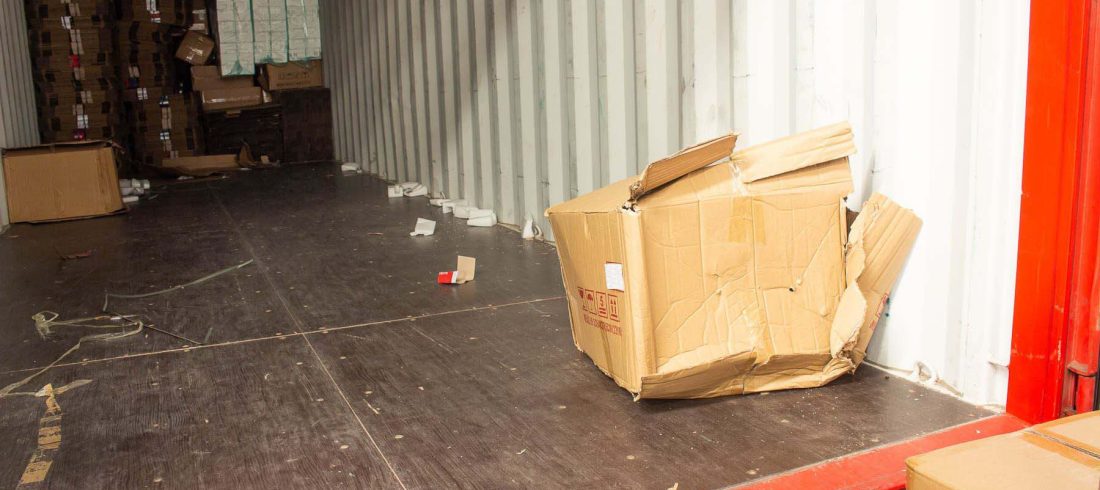
- There is a risk of cargo damage during container transfer.
- The method requires a longer transit time.
- Cross-stuffing imposes high additional costs on traders.
Frequently Asked Questions About Cross-Stacking in Maritime Transportation
Cross-stuffing is a maritime transportation method in which containers or cargo are transferred from one vessel to another. It is commonly used to overcome port capacity limitations or to bypass trade restrictions and sanctions.
This method is used due to port limitations, large vessel size, berthing restrictions, and, in some cases, to circumvent economic or political sanctions.
Disadvantages include the need for crane-equipped vessels, sensitivity to weather conditions, risk of cargo damage, extended transit time, and higher transportation costs.
No. Cross-stuffing is used for both export and import operations, particularly when direct unloading at destination ports is not feasible.
At least one vessel must be equipped with a crane to facilitate cargo transfer, and suitable weather conditions are required for safe operation. What is cross-stuffing, and what is its purpose?
Why is the cross-stuffing method used?
What are the disadvantages of cross-stuffing?
Is cross-stuffing used only for exports?
What technical requirements must vessels meet for cross-stuffing?