Carrier and the Scope of Liability
Under the laws of the Islamic Republic of Iran, a carrier is a person who, by virtue of a contract, undertakes to transport goods from a given point to a specified destination and deliver them. This concept is reflected in Article 377 of the Iranian Commercial Code, which provides that the carrier is responsible for the loss, destruction, or disappearance of commercial goods during the period of carriage, unless it proves that the damage resulted from an event beyond its control. This provision forms the basis of the carrier’s contractual liability and, in certain situations, may also give rise to non-contractual liability. Iranian law does not treat the carrier merely as a custodian. In many cases, the carrier is regarded as guarantor, unless it establishes force majeure or proves fault on the part of the consignor or consignee. The carrier may be a natural person or a legal entity that assumes responsibility for transport using its own means or through third parties. The carrier’s liability begins upon execution of the contract and continues until the cargo is completely delivered. The scope of this liability includes safeguarding the goods, correct delivery, avoidance of delay, and preservation of the cargo’s integrity. If the carrier fails to comply with these obligations, it will be required to compensate the resulting loss in accordance with Articles 386 to 392 of the Iranian Commercial Code.
Legal Basis of the Carrier’s Liability and Its Scope
The primary basis of the carrier’s liability in Iranian law is contractual liability. This liability arises from the agreement between the carrier and the consignor, or the consignee, under which the carrier undertakes to transport the cargo safely and on time. Pursuant to Article 386 of the Iranian Commercial Code, if the goods are lost or damaged during carriage, the carrier is liable unless it proves that the incident resulted from force majeure or the inherent nature of the goods. In addition, Article 220 of the Iranian Civil Code provides that an obligor must perform its obligation properly and within the agreed time, failing which it is liable to pay compensation. Accordingly, even in the absence of a written contract, commercial custom and established practice operate as supplementary terms and require the carrier to comply with standards of trust, good faith, and due care. In certain cases, the carrier’s liability may also take on a tort-based character, particularly where damage results from the carrier’s fault, or from failure to comply with transport regulations, safety requirements, or adequate supervision. Therefore, the legal foundation of a carrier’s liability in Iran is a combination of contract, custom, the Commercial Code, the Civil Code, and, in specific circumstances, insurance law.
Liability for Total or Partial Loss or Disappearance of Cargo
One of the most significant instances of a carrier’s liability arises when the goods are totally or partially destroyed, stolen, or fail to reach the destination during transport. Article 386 of the Iranian Commercial Code expressly holds the carrier liable for such loss, unless it proves a valid justification such as force majeure, including earthquakes, floods, or war. Where theft occurs in transit, and the carrier has not exercised sufficient supervision or adopted adequate protective measures, it will be required to compensate for the full loss. Likewise, if the cargo reaches the destination but a portion is missing or diminished, for example, due to tampering with packaging, the carrier will remain liable. In such disputes, the consignment note, delivery minutes, and proof of receipt play a decisive role in establishing the claim.
In Iranian court practice, liability is commonly presumed against the carrier unless the contrary is proven. Even if the carrier uses subcontractors or drivers, the transport company is typically regarded as the primary responsible party. Accordingly, the carrier must exercise the highest level of care and supervision over the cargo from the moment of receipt until delivery, failing which it will be obliged to compensate all resulting damages.
Liability for Delay in Delivery
Delays in cargo delivery are another key area of carrier liability and may result in significant legal and financial consequences. Under Article 387 of the Iranian Commercial Code, if the goods are not delivered by the agreed deadline and the owner of the goods suffers loss as a result, the carrier must compensate for the delay damages. Even if the contract does not specify an exact delivery date, delivery must occur within a reasonable and customary time. In such circumstances, delay constitutes a breach of obligation. Delay is typically established by comparing the time recorded on the consignment note with the delivery record at the destination. Where the causal connection between delay and loss is proven, including loss of commercial opportunity, depreciation of perishable goods, or contractual penalties, courts will require the carrier to pay compensation. International instruments such as the CMR and the Hamburg Rules also recognize liability where delay exceeds a reasonable period. In Iran, courts likewise rely on Articles 221 and 226 of the Iranian Civil Code to accept claims arising from late performance. Therefore, the carrier must implement appropriate operational measures to ensure timely delivery and avoid liability.
Liability for Damage or Defects in Delivered Goods
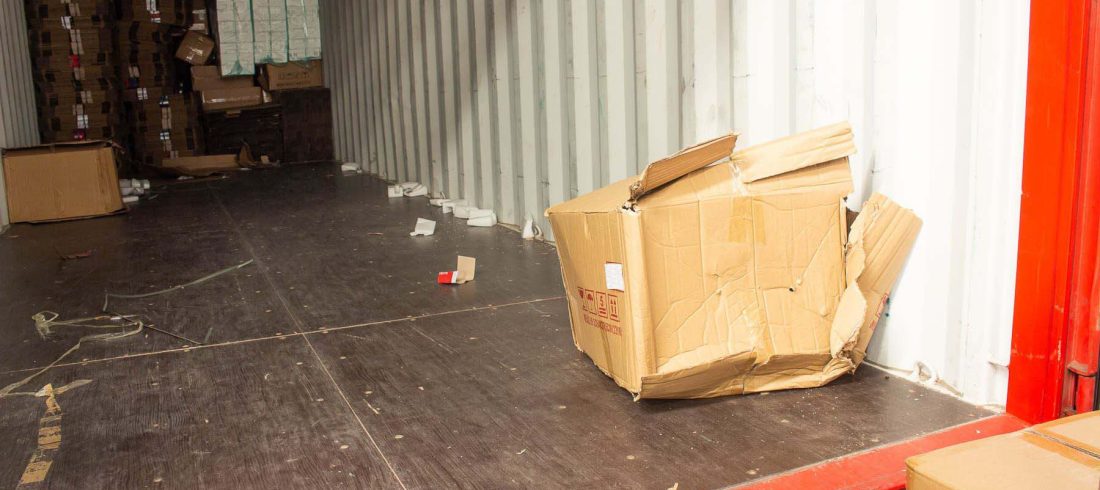
If the transported goods suffer physical damage, breakage, leakage, spoilage, or a loss of quality during transit, the carrier is liable unless it proves that the damage resulted from the goods’ inherent nature or from improper packaging by the consignor. Article 386 of the Iranian Commercial Code explicitly addresses this liability, and Article 222 of the Iranian Civil Code also supports compelling performance or awarding compensation. To establish such a loss, it is generally necessary to prepare a delivery report at the destination, obtain an expert assessment, document the condition through photographs, and compare the condition of the goods before and after transport. Based on these materials, the court may order compensation for the diminution in value. When cargo is partially damaged but remains usable, the depreciation amount is generally recoverable. If the contract contains specific requirements, such as temperature-controlled transport, and these requirements are not met, the carrier will be considered in breach. For this reason, carriers should use appropriate equipment and protocols for sensitive cargo, such as pharmaceuticals, chemicals, or food products, to reduce the risk of liability under applicable laws.
Liability for Transporting Illegal or Dangerous Goods
A carrier is expected to transport only lawful and permitted goods. If it carries prohibited, smuggled, hazardous, or environmentally harmful cargo without sufficient prior disclosure or adequate verification, it may face civil, criminal, and financial consequences. Article 391 of the Iranian Commercial Code provides that if the carrier was aware of the nature of the goods and their special risks but failed to adopt necessary measures, it will be responsible for all resulting loss. In international transport, strict rules, including those developed under the IMO framework and conventions addressing marine pollution, impose additional standards for the transport of dangerous goods. If such cargo leads to fire, leakage, contamination, or explosion, the carrier may be required to respond for all damages and penalties. Where customs or law enforcement seizes or detains the shipment and the carrier has played a role or has been negligent, liability may also be attributed to the carrier. Accordingly, transport companies should obtain accurate declarations, review shipping documents, comply with customs requirements, and ensure conformity with prohibited goods lists to mitigate serious exposure.

The Effect of Force Majeure on the Carrier’s Liability
One of the principal defenses available to the carrier is force majeure. Under Article 229 of the Iranian Civil Code, if performance becomes impossible due to external events that are unforeseeable and unavoidable, the obligor may be exempt from liability for damages. In the context of carriage, events such as earthquakes, floods, war, widespread strikes, major route blockages, or governmental orders may qualify as force majeure. However, the burden of proof rests with the carrier, and the claim must be supported by credible evidence, including official reports and reliable documentation. Iranian courts typically scrutinize force majeure defenses closely, and operational difficulties alone are not sufficient to exclude liability.
Furthermore, if the carrier could have prevented or reduced the damage by measures such as changing routes, using alternative means of transport, or providing timely preventive notice, the force majeure defense may be rejected. Therefore, although force majeure is an important legal defense, it is accepted only where the conditions of externality, unpredictability, and unavoidability are proven.
The Carrier’s Relationship With Insurers and Insurance-Based Responsibility
A carrier is generally expected to secure insurance coverage for the transported cargo to protect the interests of the consignor and consignee, particularly when the goods are high-value or involve special risks. Iranian insurance law and commercial practice commonly require transport operators to include insurance provisions in their contracts. If loss occurs and a valid policy exists, the insurer will typically compensate the beneficiary after assessment and may then exercise subrogation rights against the responsible carrier.
If the carrier fails to insure the cargo, or if the policy is defective, and an incident occurs, the carrier may be personally liable for the full amount of loss. Some insurers also condition coverage on accurate and complete disclosure of shipment details. Accordingly, failure to declare the correct origin, destination, type of goods, or true value may lead to denial of coverage. Carriers should therefore select appropriate coverage, work with reputable insurers, and record precise conditions in the contract to reduce personal exposure.

Liability in Multimodal Transport
In multimodal transport, cargo is moved from origin to destination using two or more modes of transport, such as road, rail, sea, or air. In this structure, the operator is commonly treated as a multimodal transport operator and assumes overall responsibility for the entire route. Under international trade practice, including frameworks such as FIATA, this responsibility is often understood as a combination of contractual liability, technical obligations, and an obligation to achieve the agreed result. In Iranian law, Article 386 of the Iranian Commercial Code can be applied to multimodal transport unless it is proven that a particular stage of transport was outside the principal operator’s control.
For instance, if damage occurs during the rail segment handled by a third party, the principal carrier may need to prove that it acted with due care in selecting the subcontractor and structuring the contract in line with commercial custom. Otherwise, courts may hold the principal carrier liable. Accordingly, multimodal transport contracts should clearly allocate responsibilities across stages, define delivery conditions, address insurance arrangements, and specify dispute resolution mechanisms.
Claims for Damages and the Competent Court
Where damage occurs and the carrier refuses to compensate, the cargo owner may bring a claim before the competent court. Under Article 11 of the Iranian Civil Procedure Code, the claimant may file suit in the court of the defendant’s place of residence or the place where the obligation was to be performed, such as the delivery location or the place where damage occurred. For example, if delivery took place in Tehran and the cargo was damaged there, the General Civil Court of Tehran would have jurisdiction. To pursue the claim, it is generally necessary to provide the consignment note, carriage contract, loss report, official expert opinion, formal notice, correspondence, and delivery minutes. The claimant must establish the type of loss, the amount claimed, and the grounds for the carrier’s liability. If liability is proven, the court may order compensation and, in certain circumstances, may also permit termination of the carriage contract. Where an arbitration clause exists, the dispute may be referred to the agreed arbitral forum, including an institutional body such as the Arbitration Center of the Chamber of Commerce. Therefore, the choice of forum, the filing strategy, and the quality of evidence are decisive in the success or dismissal of claims against a carrier.
Frequently Asked Questions About the Carrier and the Scope of Liability
Under Article 377 of the Iranian Commercial Code, a carrier is a natural person or legal entity that, by virtue of a contract, undertakes to transport goods from a stated origin to a specified destination and deliver them. The carrier is responsible for loss, disappearance, or damage to the cargo unless it proves that the incident occurred due to circumstances beyond its control.
The primary basis is contractual liability. Under Article 386 of the Iranian Commercial Code, the carrier is liable if the goods are lost or damaged during carriage unless it proves force majeure or the inherent nature of the goods caused the loss. Article 220 of the Iranian Civil Code further supports liability for failure to perform obligations properly and on time.
Yes. Under Article 387 of the Iranian Commercial Code, if delivery is not made by the agreed time and the goods owner suffers loss, the carrier must compensate for delay damages, unless it proves that the delay was caused by force majeure or circumstances beyond its control.
If goods are damaged during transit, the carrier is generally liable unless it proves that the damage resulted from improper packaging by the consignor or from the inherent nature of the goods. Evidence such as transport documents, delivery minutes, expert reports, and photographs is commonly used to establish and quantify the loss.
Yes. Under Article 391 of the Iranian Commercial Code, if the carrier is aware of the nature and special risks of the goods and fails to take necessary precautions, it may be liable for all resulting damages and may also face additional legal consequences, depending on the circumstances.
Under Article 229 of the Iranian Civil Code, the carrier may be exempt from liability if performance becomes impossible due to external, unforeseeable, and unavoidable events, and the carrier proves a direct causal link between the event and the loss or delay. Courts assess this defense carefully and require reliable supporting evidence.
If the cargo is insured, the insurer may compensate the beneficiary after assessment and may then seek recovery from the responsible carrier through subrogation. If the carrier fails to obtain adequate insurance and loss occurs, the carrier may be personally liable for the full damage.
In multimodal transport, the principal operator is commonly responsible for the overall route even if parts of the transport are performed by third parties, unless it proves that the loss occurred in a stage beyond its control and that it acted with due care in selecting and supervising contractors.
Under Article 11 of the Iranian Civil Procedure Code, jurisdiction generally lies with the court of the carrier’s place of residence or the place where the obligation was performed, such as the delivery location or the place of damage. If the contract includes an arbitration clause, the dispute may be referred to the agreed arbitral forum, subject to applicable rules. How is a carrier defined under Iranian law?
What is the legal basis of a carrier’s liability?
Is the carrier liable for delay in delivering cargo?
How is liability determined for damage to the delivered goods?
Is the carrier liable for transporting illegal or dangerous goods?
How does force majeure affect a carrier’s liability?
How does insurance relate to the carrier’s liability?
What is the carrier’s liability in multimodal transport?
Which court has jurisdiction over claims against a carrier in Iran?