
All You Need to Know About the Liability of Transport Companies for Shipment Delays
Delays in shipment delivery are among the most significant challenges in supply chains and can impose substantial direct and indirect costs on businesses. The liability of transport companies in this context depends on the contract of carriage, shipping documents, and the applicable legal framework. Where the delivery time is expressly stipulated in the contract, failure to deliver on time will generally constitute a breach of contract, and the carrier may be required to compensate for the resulting loss unless it can justify the delay. Even where no exact date is specified, the standard of delivery within a reasonable time applies, and a judge or arbitrator will assess reasonableness based on industry practice and the contract’s circumstances. To reduce commercial disputes, it is advisable to include clear time windows, a defined method for calculating delivery time, and a delay-reporting mechanism, so that any claims process is transparent if a problem arises.
Contractual Basis of a Carrier’s Liability for Delay
Contractual documents such as the bill of lading, consignment note, waybill, or road carriage agreement are the primary basis for determining liability. These documents typically specify the loading time, destination, and, in some cases, a delivery date or delivery window. Contract terms may impose an obligation to deliver on a fixed date or within a reasonable time, and each standard sets a different threshold for proving fault. Limitation of liability clauses, force majeure provisions, and declared value requirements are commonly included in the bill of lading or carriage contract and can affect both the type and the maximum amount of recoverable damages. Before initiating any claim, the contract and transport documents should be reviewed carefully, and any notice or claim deadlines should be observed to reduce the risk of rejection due to documentary deficiencies.
International Legal Regimes Relevant to Delay Across Transport Modes
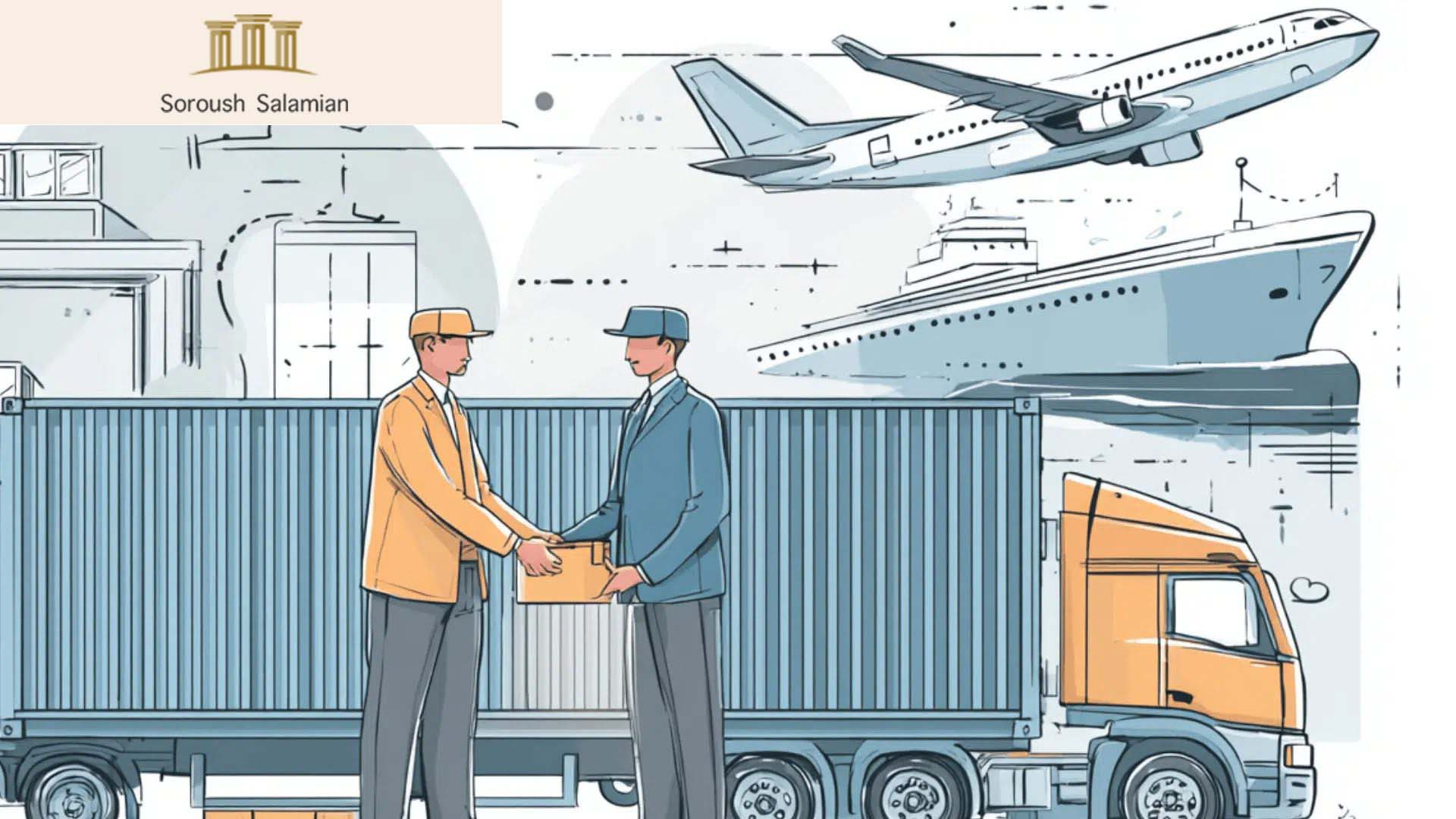
In international carriage, the governing framework may differ depending on the mode of transport, which often determines the applicable legal regime. For international road transport, the CMR Convention is commonly applicable and includes rules on liability for delay. In air carriage, the Montreal Convention establishes a liability framework for delay and related damages. In maritime transport, the legal landscape is more complex, and different conventions, including the Hamburg Rules or the Rotterdam Rules, may affect liability for delay in different ways.
In multimodal transport chains, different segments of the route may be governed by different legal regimes. Identifying the applicable convention for each leg and determining the scope of liability is essential when initiating a recovery process.
How Incoterms Affect Responsibility for Delivery Delays
Incoterms allocate costs and risk under the sales contract, but they do not replace the contract of carriage. Certain Incoterms, such as DDP, place extensive responsibilities on the seller, including delivery scheduling obligations. By contrast, terms such as EXW shift transport and timing responsibilities to the buyer. Even where the seller is responsible for arranging transport under the sales terms, the seller typically enters into a separate contract with the carrier that contains its own conditions and limitations. To reduce disputes, both the sales contract and the carriage contract should clearly define what constitutes a delay and which categories of loss are recoverable in the event of a delay.
Standards for Proving Fault by a Transport Company in Case of Delay
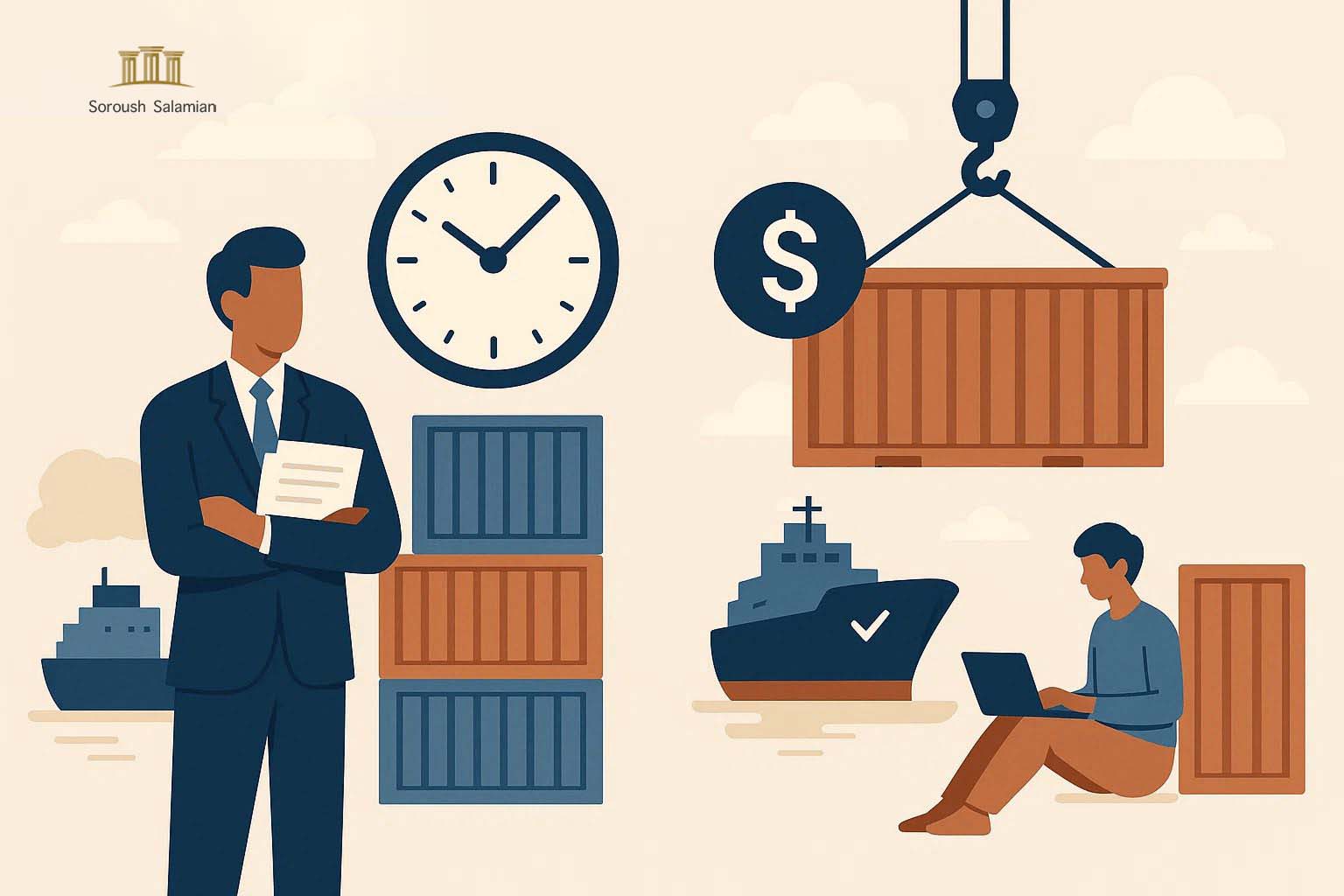
To succeed in a delay-based damages claim, three core elements generally must be established: proof that a delay occurred, proof of economic loss, and proof of causation linking the delay to that loss. The carrier may argue that the delay resulted from circumstances beyond its control or that it exercised all reasonable measures to avoid the delay. In such cases, the evidentiary burden may shift depending on the applicable law and contract terms. Evidence such as loading and delivery timestamps, email correspondence, tracking records, and transport logs can help demonstrate whether reasonable steps were taken to prevent delay. Financial documents such as invoices, lost contracts, and additional warehousing or handling charges support the quantification of damages.
Limitation of Liability and Declared Value as Risk Controls
Transport companies often set liability caps in their standard terms, and these may overlap with international conventions. The cargo interest may declare the actual value of the goods at the time of shipment and, in return for an additional fee, increase the carrier’s potential liability exposure. If the value is not declared, the carrier’s liability may be limited to a specified statutory or contractual maximum.
In many cases, limitations exclude indirect losses such as loss of profit unless expressly agreed. Understanding these limits and declaring an accurate value before shipment is among the most practical steps a cargo owner can take to reduce risk.
Force Majeure and Circumstances That May Exempt the Carrier
Force majeure may exempt a carrier from liability for delay, but such exemption is not typically automatic. Most contracts contain force majeure clauses, and reliance on them usually requires showing that the event was unforeseeable, beyond the party’s control, and prevented performance, and that reasonable mitigation efforts were undertaken. Events such as floods, earthquakes, war, sanctions, or major infrastructure disruptions may qualify as force majeure, but the boundary between force majeure and ordinary commercial risk is often scrutinized closely in disputes. Contracts should therefore define, with clarity, the relevant events and the parties’ duties in such circumstances.
Practical Steps to Claim Damages From a Carrier for Delay
A delay claim process typically includes prompt notification to the carrier, collection of relevant documents, submission of a formal claim within the applicable deadline, and, if necessary, negotiation or escalation to arbitration or court proceedings. Many carriers impose short time limits for initial notice. For that reason, it is important to lodge the complaint and provide supporting documents, such as the transport document, invoices, photographs, and tracking reports, within the first few days after the delay becomes apparent. Where special or consequential loss is claimed, it is often critical to show that the carrier knew, or should have known, that such loss was likely.
Types of Recoverable Damages in Shipment Delay Cases
Recoverable damages commonly include direct losses such as additional storage costs, alternative transport costs, and a diminution in the value of goods. Special damages, which may include lost profit under a particular contract or production line stoppage, are often recoverable only where the cargo interest informed the carrier in advance of such risks. Remote or purely consequential losses are frequently limited or excluded unless there is an explicit agreement. Careful documentation of amounts and a clear causal link between the delay and the financial loss are therefore essential.
Contractual and Operational Measures to Reduce Delay Risk
Reducing the risk of disputes and losses from delays typically requires measures such as defining clear delivery time windows, drafting precise force majeure clauses, addressing liability caps and recoverable loss categories, engaging service providers with defined service-level commitments, and purchasing appropriate insurance. Operational tools, including live tracking systems, alternative routing options, contingency planning, and a reasonable late delivery penalty clause, can also strengthen incentives for timely performance. Defining performance indicators, such as on-time delivery percentages, helps businesses evaluate carrier performance and manage risk in a practical, measurable manner.
The Role of Insurance in Covering Delay-Related Loss
Cargo insurance plays a central role in covering physical loss or damage to goods, but delay coverage is not standard in many policies. For time-sensitive goods such as perishables or critical production components, businesses may need time-based or delay-focused extensions to cover losses arising from delays.
The insurance notification process and the required documentation may differ from those for a claim against the carrier. Coordinated action with both the insurer and the carrier, combined with consistent financial documentation, can reduce conflicts and avoid unnecessary payment delays.
Legal Recommendations for Cargo Owners and Transport Companies
Carrier liability for shipment delays is a multi-dimensional issue shaped by the contract, the mode of transport, the governing legal regime, and the actual circumstances of the shipment. Practical recommendations include reviewing the sales contract alongside the carriage contract, declaring cargo value where appropriate, securing suitable insurance coverage, documenting timelines and communications thoroughly, drafting clear force majeure and service level provisions, and submitting claims within contractual and statutory time limits. Where the financial exposure is significant or the matter is legally complex, obtaining specialist transport law advice and strengthening the evidentiary record can materially increase the prospects of recovery.
Frequently Asked Questions About the Liability of Transport Companies for Shipment Delays
Not necessarily. Liability depends on the agreed delivery terms, the governing law, and whether the carrier can rely on contractual exclusions, statutory limits, or force majeure-type defenses.
In many cases, the standard becomes delivery within a reasonable time, assessed by reference to the nature of the goods, route conditions, and industry practice.
Often, only if the loss was foreseeable, the carrier was informed in advance, and the applicable contract or law does not exclude such losses.
No. Incoterms allocate responsibilities between buyer and seller under the sales contract. Carrier liability is governed by the contract of carriage and applicable transport law.
If the value is not declared, the liability may be capped. Declaring value, typically for an additional charge, can increase the recoverable amount.
As soon as possible. Many carriage terms impose short notice deadlines, and late notice can weaken or defeat a claim. Is a transport company automatically liable for any delivery delay?
What if the contract does not specify a delivery date?
Can I claim loss of profit caused by a delay?
Do Incoterms determine the carrier’s liability for delay?
Why is the declared value important?
How quickly should I notify the carrier after a delay?


My company lost a major customer because our shipment arrived late. Can we claim all the business losses from the transport company?
A delay claim depends on the transport agreement, the cause of the delay, and whether the losses can be legally connected to the carrier’s actions. Not every commercial loss is automatically recoverable, so the documents and circumstances would need to be reviewed carefully.
If a carrier promises a delivery date and fails to meet it, does that always mean they are responsible?
A missed delivery date can be an important factor in assessing liability, but responsibility depends on the contract terms, the reason for the delay, and whether the carrier failed to perform its obligations. A delay alone does not always establish liability.
My cargo was delayed because the shipping company submitted wrong documents. Can the carrier be held responsible?
Incorrect or incomplete transport documents can contribute to delays and may create liability issues for the carrier. However, the effect depends on the role of the carrier, the documents involved, and the connection between the mistake and the delay.
The carrier says the delay was caused by customs. How can I know if they are avoiding responsibility?
Customs delays can result from different causes, including carrier-related issues, missing documents, inspections, or actions by customs authorities. Determining responsibility requires reviewing the timeline, documents, and the duties of each party involved.
Are transport companies responsible for delays caused by their subcontractors?
The answer depends on the transport arrangement, the role of the subcontractor, and the applicable legal rules. In many cases, the responsibilities accepted by the main carrier and the relationship between the parties are important factors.
What proof does a cargo owner need to show that the carrier caused the delay?
Evidence such as the transport contract, bill of lading, delivery records, communication with the carrier, and documents showing the timeline of events can be important. The required evidence depends on the details of the dispute.
If my shipment was delayed because of a problem at the port, can I still make a claim against the carrier?
A port-related delay does not automatically make the carrier responsible or free them from responsibility. The cause of the delay and the obligations of each party must be examined in the context of the transport agreement.
Can a carrier limit its responsibility for late delivery in the contract?
Transport contracts may include provisions about liability and limitations, but their effect depends on the applicable law and the wording of the agreement. A review of the specific contract would be necessary to understand how such clauses apply.
My goods arrived late and I had to pay extra storage fees. Can those costs be included in a claim?
Additional costs caused by delays may be relevant in a claim, but whether they can be recovered depends on the contract, the cause of the delay, and the applicable legal rules. Supporting documents are usually important when evaluating these losses.
I am negotiating a transport contract now. What should I add to protect myself from delivery delays?
Clear terms about delivery deadlines, responsibilities, notification procedures, and consequences of delays can help reduce uncertainty. The appropriate clauses depend on the type of transportation, cargo, and commercial relationship.