What Are Clean and Claused Bills of Lading?
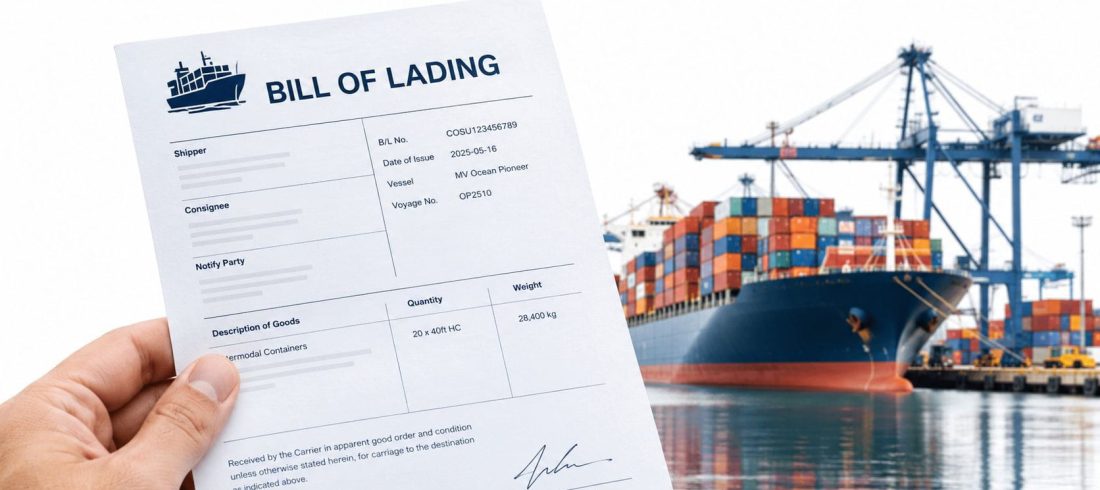
A bill of lading is one of the most important documents in the international transportation of goods. It records information concerning the cargo, shipper, consignee, and terms of carriage. The apparent physical condition of the goods when the carrier receives them may also affect the type of bill of lading issued. In this respect, bills of lading are commonly classified into two important categories: Clean Bills of Lading and Claused Bills of Lading.
Understanding the distinction between these two documents is particularly important for exporters, importers, shipping companies, banks, and participants in international trade. The type of bill of lading may affect document acceptance during payment procedures, particularly in transactions involving letters of credit.
Furthermore, remarks about the condition of the goods may affect liability for their transportation. This article examines the meaning of Clean and Claused Bills of Lading, their principal differences, the circumstances of their issuance, their legal implications, and important considerations when preparing and receiving these documents.
What Is a Clean Bill of Lading and What Are Its Characteristics?
A Clean Bill of Lading is a document in which the carrier or its authorized representative has not recorded any specific adverse notation concerning the apparent condition of the goods or their packaging at the time of receipt. In other words, the document indicates that the goods and their packaging appeared in acceptable external condition when received for carriage.
For example, if an exporter delivers a shipment of industrial components to a carrier, the packages are intact, show no visible signs of breakage or tearing, and the carrier records no apparent defects, a Clean Bill of Lading may be issued.
However, issuing a Clean Bill of Lading does not guarantee the quality of the goods or the condition of all their components. The carrier’s examination is generally limited to the conditions observable at the time of receipt and the scope of its responsibilities.
For example, where the contents of sealed packages have not been inspected, the bill of lading alone cannot establish that the goods inside those packages are free from damage or defects.
In international trade, a Clean Bill of Lading is particularly significant because many sales contracts and banking payment arrangements require presentation of shipping documents that satisfy specified conditions. Nevertheless, acceptance depends on the contractual provisions, the terms of the letter of credit, and other applicable documentary requirements.
What Is a Claused Bill of Lading and When Is It Issued?
A Claused Bill of Lading is a document in which the carrier records a qualification or adverse notation concerning the apparent condition of the goods or their packaging. Such notations generally relate to circumstances observed when the cargo is received and may be relevant to assessing its condition during subsequent stages of transportation.
For example, suppose several packages in a shipment show signs of tearing, dents, or moisture when delivered to the carrier. Under such circumstances, the carrier may record a description of the observed condition in the bill of lading. Expressions such as “damaged packaging,” “a specified number of wet cartons,” or “several broken packages” are examples of such notations.
Recording these observations helps establish transparency concerning the condition of the shipment. It may be relevant when the goods are delivered at their destination or when disputes arise between the parties.
However, the notation should be accurate, clear, and consistent with the condition actually observed. General or ambiguous descriptions may give rise to subsequent disagreements.
Issuing a Claused Bill of Lading does not necessarily mean the goods are unfit for transportation or conclusively establish the shipper’s liability. The document reflects the condition recorded at the time of receipt, and its legal consequences must be assessed in light of the contract of carriage, transaction documents, and actual circumstances of the shipment.

What Is the Difference Between a Clean Bill of Lading and a Claused Bill of Lading?
The main difference between a Clean Bill of Lading and a Claused Bill of Lading is whether the carrier notes any adverse observations about the apparent condition of the goods or their packaging when received.
This distinction may affect the acceptance of shipping documents, the assessment of cargo damage, and the commercial relationships between the parties.
In a Clean Bill of Lading, the carrier has not recorded any specific adverse notation concerning the apparent condition of the cargo or its packaging. By contrast, a Claused Bill of Lading contains remarks describing defects or unsatisfactory conditions observed at the time of receipt.
The following considerations illustrate the principal differences:
- Recorded Condition of the Goods: A Clean Bill of Lading contains no specific adverse notation, whereas a Claused Bill of Lading records defects or unfavorable conditions observed in the shipment.
- Banking Acceptance: Many transactions involving letters of credit require a Clean Bill of Lading. A Claused Bill of Lading may fail to comply with the terms of the letter of credit.
- Damage Assessment: The notations contained in a Claused Bill of Lading may be relevant when assessing the condition of the goods before transportation commenced.
- Commercial Relationships: Issuing a Claused Bill of Lading may prompt the buyer to request additional explanations about the condition of the shipment.
- Carrier Liability: The type of bill of lading does not, by itself, determine ultimate liability. The contract of carriage, applicable laws, and evidence concerning the timing and cause of the damage must also be considered.
Importantly, a Clean Bill of Lading does not guarantee that the goods will arrive at their destination without damage. Similarly, an adverse notation in a Claused Bill of Lading does not, by itself, establish that all subsequent damage occurred before transportation began.
What Circumstances May Lead to the Issuance of a Claused Bill of Lading?
A Claused Bill of Lading is generally issued when the carrier identifies visible defects in the goods or their packaging at the time of receipt. Document these defects in a manner that accurately reflects the condition observed.
The principal circumstances that may result in an adverse notation include the following:
- Damaged Packaging: Torn cartons, broken boxes, dented metal containers, or open packaging may justify an adverse notation.
- Moisture or Evidence of Water Damage: Where packages are wet or show signs of water penetration, the observed condition may be recorded in the bill of lading.
- Visible Breakage or Damage to Goods: Where goods are delivered without adequate packaging and their damage is apparent, the carrier may record this condition.
- Shortages or Apparent Discrepancies in Package Quantities: Where the number of packages delivered does not correspond with the declared information, the discrepancy should be properly documented.
- Inadequate Packaging for Transportation: Weak packaging or packaging unsuitable for the weight, dimensions, or nature of the goods may provide grounds for an adverse notation.
However, not every discrepancy necessarily results in the issuance of a Claused Bill of Lading. The nature of the goods, the method of transportation, the scope of the carrier’s examination, and the contractual provisions may also influence this determination.
For this reason, the condition of the goods and their packaging should be examined before delivery to the carrier, and any identified defects should be remedied where possible.
Why Is a Clean Bill of Lading Important for Letters of Credit and International Payments?
In international commercial transactions, payment for goods may be arranged through a Letter of Credit (L/C). Under this payment mechanism, the bank acts in accordance with the terms of the credit and the documents presented.
Where the letter of credit requires a Clean Bill of Lading, an adverse notation about the condition of the goods or their packaging may create a documentary discrepancy.
For example, an exporter sells goods to a foreign buyer under a letter of credit requiring a Clean Bill of Lading. If the carrier records a notation concerning damaged packaging, the document may not comply with the terms of the credit. In such circumstances, payment may depend on examining the discrepancy and the subsequent decision made in accordance with the credit requirements.
Nevertheless, banks generally assess documents according to the terms of the letter of credit and the applicable rules governing documentary examination. Accordingly, the presence or absence of particular wording must be evaluated in the context of the entire document and the requirements of the transaction.
To reduce the likelihood of complications, exporters should carefully review the letter of credit terms before dispatching the goods and ensure appropriate packaging.
Coordination with the carrier and the parties responsible for preparing shipping documents may also reduce the risk of issuing documents that fail to comply with the credit requirements.
Where an adverse notation has been entered in the bill of lading, its removal or amendment must accurately reflect the actual condition of the goods and comply with the applicable procedures.
Requesting the inclusion of inaccurate information to obtain payment through a bank may result in contractual and legal consequences.
Does a Clean Bill of Lading Guarantee That the Goods Are in Perfect Condition?
A common misconception concerning a Clean Bill of Lading is that its issuance guarantees the complete integrity and quality of the goods in every respect.
In fact, this document generally indicates that the carrier did not record any specific adverse notation concerning the apparent condition of the goods or their packaging when receiving them for carriage.
The scope of the carrier’s examination depends on the circumstances of delivery and the nature of the shipment.
For example, where goods are delivered in sealed packaging, the carrier may not be able to inspect their contents. In such circumstances, a Clean Bill of Lading does not conclusively confirm the quality, internal quantity, or technical functionality of every item in the packages.
Furthermore, goods may be in satisfactory condition when received by the carrier but subsequently sustain damage during transportation because of unsuitable conditions, improper handling, or other contributing factors.
Therefore, a Clean Bill of Lading does not, by itself, establish the condition of the goods at the time of final delivery.
To assess the condition of the goods accurately, you may need to examine additional documents, including inspection reports, quality certificates, packing lists, photographs taken during loading, delivery receipts, and damage reports.
For sensitive or high-value shipments, arranging an independent inspection before transportation may help reduce potential disputes.
Consequently, while a bill of lading is an important document for assessing cargo condition, it should be considered alongside other relevant records and evidence.
How Can the Issuance of a Claused Bill of Lading Be Prevented?
Where the terms of a transaction or letter of credit require a Clean Bill of Lading, properly preparing the shipment before delivering it to the carrier is particularly important.
The objective is to ensure the goods are delivered in suitable condition and that visible defects do not lead to adverse notations on the bill of lading.
The following measures may help achieve this objective:
- Pre-Shipment Inspection: Inspect the goods and their packaging for breakage, tearing, moisture, and other visible damage before loading.
- Appropriate Packaging: Ensure that the packaging is suitable for the weight, dimensions, sensitivity, and transportation method applicable to the goods.
- Protective Materials: Use suitable protective equipment and materials for fragile goods or products susceptible to moisture damage.
- Documenting Cargo Condition: Take clear photographs of the goods and their packaging before delivery to help assess potential disputes.
- Verifying Package Quantities: Confirm that the number of packages delivered corresponds with the packing list and shipping particulars.
- Coordination With the Carrier: Examine the carrier’s cargo acceptance procedures and packaging requirements before delivering the shipment.
- Reviewing Banking Documents: Where payment is arranged through a letter of credit, review the bill of lading requirements before dispatching the goods.
If the carrier identifies a defect, preferably examine the matter before finalizing the shipping documents.
Where actual damage exists, correcting the packaging or remedying the defect, where feasible, may enable the issuance of a bill of lading without an adverse notation.
However, any removal of a notation must be justified by the actual condition of the goods and performed in accordance with the applicable transportation requirements.
Recording inaccurate information in a bill of lading may affect the reliability of the shipping documents and the legal position of the parties if damage or a dispute subsequently arises.
Legal Implications of Clean and Claused Bills of Lading in International Transportation
Both Clean and Claused Bills of Lading play important roles in documenting cargo condition and examining potential disputes.
Differences in the recorded observations may influence the assessment of evidence and the procedures for addressing cargo damage claims. However, ultimate liability depends on the overall circumstances of the transaction and transportation.
In a Claused Bill of Lading, a precise notation describing visible damage may establish that the recorded condition existed when the carrier received the goods.
This information may become relevant when assessing a cargo damage claim, examining a dispute between the shipper and consignee, or evaluating the condition of the shipment at its destination.
By contrast, a Clean Bill of Lading may serve as evidence that no specific adverse notation concerning the apparent condition of the goods or their packaging was recorded at the time of receipt.
Nevertheless, this fact alone is insufficient to establish when any damage occurred.
Additional evidence, including inspection reports, photographs, loading and discharge records, and the terms of the contract of carriage, must also be examined.
From a contractual perspective, the parties should understand the provisions governing carrier liability, procedures for notifying cargo damage, deadlines for submitting objections or claims, and the required supporting documentation.
These matters may vary according to the mode of transportation, contractual arrangements, and governing law.
In international transactions, coordinate bill of lading requirements with the sales contract and payment arrangements before shipping the goods.
Using precise descriptions, retaining copies of relevant documents, and maintaining proper records of cargo condition can reduce the likelihood of disputes and make it easier to establish claims.
Frequently Asked Questions About Clean and Claused Bills of Lading
A Clean Bill of Lading is a document in which the carrier has not recorded any specific adverse notation concerning the apparent condition of the goods or their packaging at the time of receipt. This document does not guarantee the complete integrity of the goods or the absence of hidden defects.
A Claused Bill of Lading is a document containing notations concerning visible defects, such as torn packaging, signs of moisture, breakage, or an unsatisfactory cargo condition. These remarks document the condition observed when the goods were received.
The principal difference concerns the presence or absence of adverse notations relating to the apparent condition of the goods or their packaging. A Clean Bill of Lading contains no such notation. In contrast, a Claused Bill of Lading records observed defects.
Acceptance of a Claused Bill of Lading depends on the terms of the letter of credit and the documentary requirements of the transaction. Where a Clean Bill of Lading is required, an adverse notation may result in a documentary discrepancy.
No. A Clean Bill of Lading generally indicates no adverse notations about the apparent condition of the goods or their packaging. The internal condition of packaged goods and their technical quality may require separate inspections.
Damaged packaging, signs of moisture, visible breakage, discrepancies in package quantities, and inadequate packaging are among the circumstances that may lead to adverse notations in a bill of lading.
The likelihood of visible defects can be reduced by inspecting goods before loading, using appropriate packaging, verifying package quantities, taking photographs of the shipment's condition, and coordinating with the carrier.
No. The type of bill of lading is an important element of evidence, but determining liability also depends on the contract of carriage, governing law, timing of the damage, and other available documents and evidence. What is a Clean Bill of Lading?
What is a Claused Bill of Lading?
What is the main difference between a Clean Bill of Lading and a Claused Bill of Lading?
Is a Claused Bill of Lading acceptable under a letter of credit?
Does a Clean Bill of Lading confirm that the goods are in perfect condition?
What circumstances may result in the issuance of a Claused Bill of Lading?
How can the likelihood of receiving a Claused Bill of Lading be reduced?
Does the type of bill of lading alone determine liability for cargo damage?