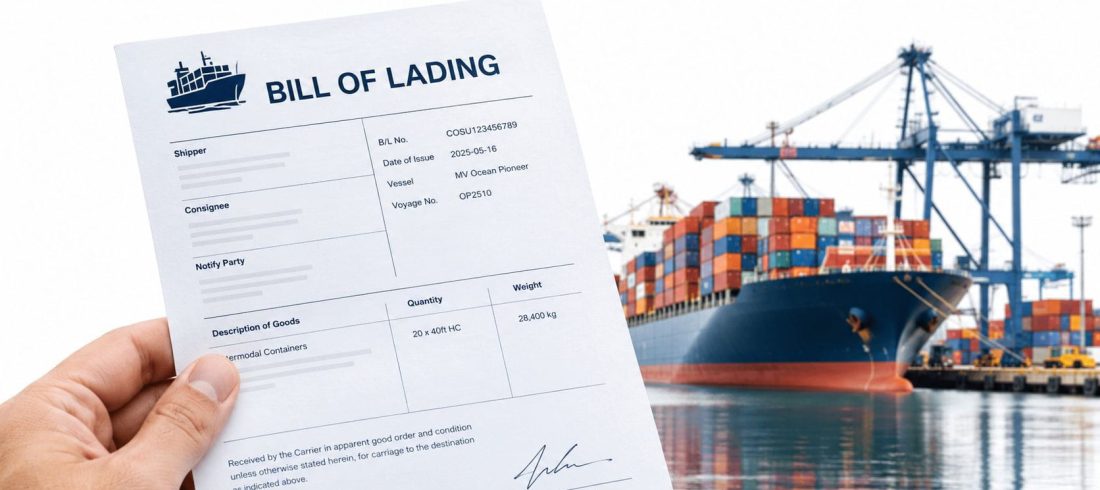
What Is a Straight Bill of Lading and What Is It Used For?
A Straight Bill of Lading is a document issued by a carrier or its authorized representative that evidences the receipt of goods for maritime transportation and specifies the conditions governing their delivery to a designated consignee. Under this type of bill of lading, the consignee is expressly identified by name, and the carrier generally delivers the goods to the individual or entity specified in the document, provided the applicable legal and contractual delivery requirements have been satisfied.
A principal characteristic of a Straight Bill of Lading is its distinction from bills of lading that are transferable through endorsement. Negotiable bills of lading permit the transfer of rights arising from the document, subject to the relevant requirements. By contrast, a Straight Bill of Lading is generally non-negotiable, and the designated consignee plays an important role in identifying the party entitled to receive the cargo.
This document is commonly used in international trade, shipments between affiliated companies, transportation of goods to an identified buyer, and contractual arrangements that do not contemplate transferring shipping documents through endorsement. Nevertheless, its precise application depends on the terms of the contract of carriage, the governing regulations, and the practices followed at the destination port.
To understand the legal implications of a Straight Bill of Lading, it is essential to distinguish between three separate matters. The first is evidence of receipt of goods for carriage, the second is the identification of the party entitled to demand delivery of the cargo, and the third is the transfer of ownership of the goods. Although these matters are interconnected, they do not necessarily produce identical legal consequences.
Differences Between a Straight Bill of Lading and a Negotiable Bill of Lading
The main difference between a Straight Bill of Lading and a Negotiable Bill of Lading concerns the transferability of the rights under the document and the procedures governing cargo delivery.
Under a Straight Bill of Lading, the consignee is specifically identified, and the document generally cannot be transferred to another party through endorsement. By contrast, a Negotiable Bill of Lading may be transferred to a subsequent holder through endorsement and delivery of the document, subject to applicable legal requirements and its terms. In the case of a bearer bill of lading, delivery of the document may produce the relevant legal effects.
This distinction is particularly significant in commercial transactions. For example, where a seller intends to transfer goods to another buyer during transit and wants to use the transfer of shipping documents to control cargo delivery, the type of bill of lading may affect the feasibility of that arrangement. A Straight Bill of Lading generally does not provide the same flexibility through the transfer of the document itself.
However, the non-negotiable nature of a Straight Bill of Lading does not mean that ownership of the goods cannot be transferred under any circumstances. Ownership may pass under the sales contract, a separate agreement between the parties, or the applicable legal rules, even where the shipping document itself is non-negotiable.
In such circumstances, transferring ownership does not necessarily involve transferring the bill of lading, and delivery of the goods remains subject to the requirements for identifying the consignee and the carrier’s applicable procedures.
Therefore, the choice between a Straight Bill of Lading and a Negotiable Bill of Lading should depend on the transaction structure, the agreed payment method, the possibility of reselling the goods, and the destination’s delivery requirements.
Does a Straight Bill of Lading Transfer Ownership of Goods?
One important question in maritime transport law is whether issuing a Straight Bill of Lading or identifying a consignee in the document automatically transfers ownership of the goods.
The answer depends on the sales contract, the governing law, and the transaction’s circumstances. Generally, a Straight Bill of Lading primarily serves as a shipping document and evidence that the carrier received the goods for transportation. Merely identifying a consignee in the document is insufficient, by itself, to establish the transfer of ownership.
In many international commercial transactions, the sales contract or applicable law determines when ownership passes. The parties may agree that ownership will transfer upon full payment of the purchase price, delivery of the goods to the carrier, issuance of specified documents, or satisfaction of another contractual condition.
Under such circumstances, the bill of lading may constitute one of the documents evidencing performance of the agreement. However, to determine the timing and legal mechanism of the transfer of ownership, one must examine all relevant agreements and documents.
For example, suppose a seller sells goods to an identified buyer and issues a Straight Bill of Lading in that buyer’s name. If the sales contract provides that ownership transfers only after the purchase price has been paid in full, merely issuing the bill of lading in the buyer’s name does not necessarily mean that this condition has been satisfied.
It is also necessary to distinguish between ownership of the goods and the right to demand their delivery. A party may own the goods under the sales contract but still be required to present documentation or complete prescribed formalities before receiving the cargo at the destination port.
Accordingly, examining the bill of lading without reviewing the sales contract and other transaction documents may result in an incorrect legal interpretation.
The Role of the Named Consignee in a Straight Bill of Lading and the Right to Receive Goods
The consignee’s identity is particularly important in a Straight Bill of Lading because the carrier relies on the information in the document and applicable regulations to identify the party authorized to receive the cargo.
Designating a specific consignee may reduce uncertainty about the intended recipient and lower the risk of delivery to an unauthorized party.
Nevertheless, identifying an individual or entity in the consignee section of the bill of lading does not, by itself, resolve every legal issue associated with cargo delivery.
The carrier may require identification documents, customs authorizations, clearance documentation, payment of applicable charges, or compliance with specific requirements at the destination port before releasing the goods.
Furthermore, where a dispute arises concerning ownership or the right to receive the cargo, the contractual provisions and applicable legal rules may influence the outcome.
For example, a buyer may be identified as the consignee in the bill of lading but may not yet have fulfilled all contractual obligations. In such circumstances, it is necessary to determine whether the sales contract grants the seller the right to suspend delivery and whether that right is enforceable against the carrier or requires separate legal action.
Changing the consignee after a Straight Bill of Lading has been issued is also generally more complicated than endorsing a Negotiable Bill of Lading.
Depending on the carrier’s regulations and the governing law, you may need to amend the document or obtain valid instructions from authorized parties.
Therefore, before issuing a Straight Bill of Lading, align the consignee’s particulars with the sales contract, shipping instructions, and commercial documentation to minimize the risk of disputes during customs clearance and cargo delivery.
The Effect of a Straight Bill of Lading on International Transactions and Payment of the Purchase Price
A Straight Bill of Lading may affect the performance of the seller’s and buyer’s obligations in international commercial transactions, particularly where payment, presentation of documents, and delivery of goods are interconnected.
The choice of bill of lading should align with the payment method and the degree of control the seller requires over the cargo.
In certain transactions, sellers use negotiable shipping documents to retain control over cargo delivery until they receive payment or specified contractual conditions are fulfilled.
A Straight Bill of Lading generally does not provide the same mechanism through the retention and transfer of the document, as it is issued to a designated consignee and is ordinarily not transferable through endorsement.
This issue is particularly important in credit sales and transactions involving documentary collection.
Where a seller expects the buyer to obtain delivery of the cargo only after making payment or accepting a payment obligation, the seller must establish an appropriate mechanism from the outset to coordinate the sales contract, contract of carriage, and payment arrangements.
Otherwise, the seller may retain a contractual entitlement to payment while lacking effective control over the delivery of the goods.
In transactions involving letters of credit, the terms of the credit and the banking rules agreed upon by the parties must also be examined. The acceptable type of bill of lading, consignee particulars, requirements concerning original documents, and other documentary conditions may affect whether the bank accepts or rejects the documents presented.
Consequently, selecting a Straight Bill of Lading without reviewing the letter of credit terms may result in documentary discrepancies.
Ultimately, select the type of bill of lading based on the transaction’s commercial objectives. Coordination between sales, shipping, finance, and legal departments can help reduce disputes and prevent disruptions in payment collection or cargo delivery.
Legal Requirements for Delivering Goods Under a Straight Bill of Lading
Delivery of goods under a Straight Bill of Lading is subject to contractual, statutory, and operational requirements.
The primary consideration is that the carrier must identify the party entitled to receive the cargo based on the shipping document and applicable regulations.
Under this type of bill of lading, the consignee is generally identified from the outset. However, the method of verifying the consignee’s identity and the documentation required for delivery may vary depending on the destination country, port, and contractual terms.
In certain jurisdictions and under particular port practices, goods covered by a Straight Bill of Lading may be delivered without presenting the original document, provided the governing law and terms of carriage permit such delivery.
In other circumstances, you may need to present the original bill of lading or comply with additional formalities. Therefore, no single delivery rule applies universally to all Straight Bills of Lading and ports worldwide.
Furthermore, if the designated consignee refuses to accept the cargo or cannot be identified, storage charges, demurrage, or other related expenses may arise.
Responsibility for these charges must be assessed in accordance with the contract of carriage, sales contract, and applicable regulations.
If the parties wish to change the consignee after the bill of lading has been issued, they must establish the requirements for amending the document and the authority of the requesting party.
The carrier generally cannot amend the consignee’s particulars or release the cargo to another party based solely on an unauthorized request.
To minimize legal risks, review the consignee’s particulars, document presentation requirements, customs clearance conditions, and cargo delivery procedures at the destination port before the vessel departs.
These measures may help prevent delays and disputes between the seller, buyer, and carrier.
Carrier Liability and Legal Risks Arising from Improper Cargo Delivery
The maritime carrier is responsible for performing its obligations under the contract of carriage and applicable laws.
One of its principal duties is to deliver the cargo to the party entitled to receive it under the bill of lading and the relevant legal provisions.
In the case of a Straight Bill of Lading, correctly identifying the consignee is particularly important because the document is generally not intended to facilitate the transfer of rights through endorsement.
If the cargo is delivered to a party who is not entitled to receive it, the carrier may incur contractual or statutory liability.
However, ultimate liability depends on factors such as the wording of the bill of lading, contractual conditions, port regulations, governing law, and the parties’ conduct.
For example, where a carrier releases cargo contrary to valid instructions or without complying with the required formalities, the party legally entitled to receive the goods may have grounds to pursue a claim for damages.
Conversely, the seller and buyer must also perform their respective contractual obligations properly.
Providing incorrect consignee information, delaying document submission, failing to coordinate the sales contract with shipping instructions, or issuing conflicting instructions may disrupt the delivery process.
To manage these risks, carriers should verify the consignee’s identity and examine the required documentation in accordance with established procedures before releasing the cargo.
The parties to the transaction should also ensure that all instructions concerning changes to the consignee or delivery arrangements are properly documented and verifiable.
Keeping copies of the sales contract, bill of lading, shipping instructions, correspondence about consignee changes, and customs clearance documents may help establish contractual obligations and assess liability if a dispute arises.
Important Considerations When Selecting and Drafting a Straight Bill of Lading
Select a Straight Bill of Lading based on the nature of the transaction, payment arrangements, ownership status of the goods, and delivery requirements.
Before issuing the document, the seller and buyer should determine whether they require a shipping document that permits the transfer of rights through endorsement or whether their objective is simply to identify a specific consignee and facilitate cargo delivery.
First, ensure the particulars in the bill of lading match the sales contract and commercial invoice.
The consignee’s name and address, shipper’s particulars, description of the goods, number of packages, identifying marks, and shipping information should match the other relevant documents.
Errors in these particulars may cause delays during customs clearance or disputes over which party is authorized to receive the cargo.
The second consideration is the payment arrangement.
Where the seller relies on control of shipping documents to obtain payment, ensure that a Straight Bill of Lading is compatible with the agreed payment method.
In transactions involving letters of credit, the type of bill of lading and its documentary requirements must also comply with the terms of the credit.
The third consideration is the governing law and the regulations applicable at the destination.
The legal effects of a Straight Bill of Lading, requirements for presenting an original document, and procedures for changing the consignee may differ between legal systems.
Consequently, relying on practices commonly followed in one country when conducting a transaction involving another destination may create legal risks.
It is essential to distinguish between the transfer of ownership, the transfer of the right to receive the goods, and the transfer of rights arising from the shipping document.
Carefully drafting the sales contract and contract of carriage, together with obtaining a legal review before issuing the bill of lading, can help the parties avoid disputes and unforeseen expenses.
Frequently Asked Questions About Straight Bills of Lading
A Straight Bill of Lading is a shipping document issued for the carriage of goods that identifies a specific consignee by name. It is generally non-negotiable, and delivery of the goods is carried out in accordance with the consignee's particulars and the applicable legal and contractual requirements.
The issuance of a Straight Bill of Lading or the identification of a consignee in the document does not necessarily transfer ownership of the goods. The timing of the transfer of ownership is generally determined by the sales contract and the governing law.
A Straight Bill of Lading is generally issued to a designated consignee and is not transferable through endorsement. A Negotiable Bill of Lading may be transferred through endorsement or another prescribed method, subject to applicable legal requirements and the terms of the document.
This depends on the governing law, the terms of the contract of carriage, and the practices followed at the destination port. In certain circumstances, presentation of the original document is required, while in others, delivery may be permitted following verification of the consignee's identity and compliance with the prescribed formalities.
Changing the consignee depends on the terms of the bill of lading, the carrier's regulations, and the governing law. Such a change generally requires valid authorization and formal amendment of the shipping particulars. It is not equivalent to the simple endorsement of a Negotiable Bill of Lading.
This type of bill of lading may affect the seller's control over cargo delivery. Where payment depends on the presentation or transfer of shipping documents, the terms of the sales contract and the payment arrangements must be coordinated with the type of bill of lading used.
A Straight Bill of Lading is a document associated with the carriage of goods and the identification of their consignee. However, the consignee designation does not, by itself, constitute conclusive proof of ownership. The sales contract and applicable law must also be examined to determine ownership of the goods. What is a Straight Bill of Lading?
Does a Straight Bill of Lading transfer ownership of the goods?
What is the difference between a Straight Bill of Lading and a Negotiable Bill of Lading?
Is presentation of the original document required to receive goods under a Straight Bill of Lading?
Can the consignee named in a Straight Bill of Lading be changed?
How does a Straight Bill of Lading affect payment of the purchase price?
Is a Straight Bill of Lading considered proof of ownership of the goods?