An Examination of Legal Liability for Ship Collisions with Port Facilities
Ship collisions with port facilities are significant incidents in the maritime transportation industry that can cause substantial financial damage to docks, cranes, cargo handling equipment, breakwaters, and other port infrastructure. Such incidents may also suspend port operations, delay cargo unloading, trigger disputes between shipping companies and port operators, and lead to legal proceedings. Determining legal Liability in these circumstances requires a thorough examination of the incident’s cause, how the vessel was navigated, the condition of the equipment, weather conditions, operational instructions, and the obligations of the parties involved.
To address such cases, it is necessary to establish which individual or entity was responsible for preventing the incident, whether applicable safety standards were observed, and how the resulting damage can be substantiated. The shipowner, vessel operator, master, marine pilotage company, port operator, or several parties may be subject to a liability assessment. This article examines the legal aspects of ship collisions with port facilities, how fault is established, the procedures for claiming compensation, and the role of a specialized maritime lawyer in pursuing such cases.
What Constitutes a Ship Collision with Port Facilities from a Legal Perspective?
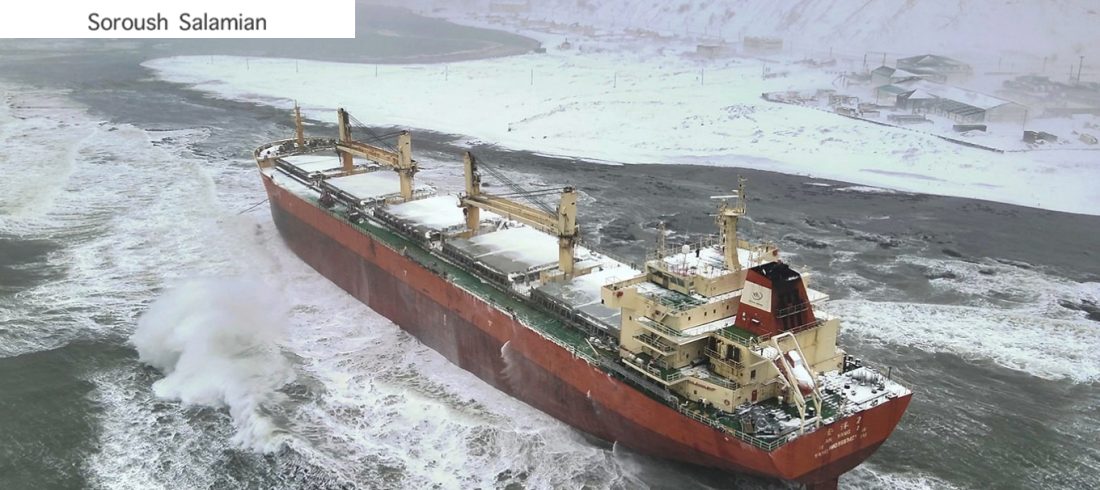
A ship collision with port facilities occurs when a vessel contacts a port structure or installation while entering or departing a port, berthing, unberthing, or maneuvering within port waters. Such contact may damage docks, protective walls, cranes, container terminals, pipelines, bunkering facilities, or other fixed assets. From a legal perspective, the nature of the incident and its relationship to the parties’ obligations are particularly important, as a collision alone does not establish which party is ultimately responsible for compensating the resulting damage.
When examining such a case, you must establish a clear connection between the collision, its cause, and the obligation to compensate for the resulting damage. For example, if a vessel strikes a dock because of a propulsion system malfunction, it is necessary to determine when the malfunction developed, who knew of it, and whether the incident could have been prevented. Conversely, if port equipment created an unusual obstruction along the vessel’s intended route, the port operator may also face Liability.
Applicable laws, port agreements, maritime navigation regulations, and the incident’s location all help determine the legal framework governing the case. Accordingly, any legal assessment must consider the relevant documentation and the specific circumstances of each incident.
Which Parties May Be Liable for Damage to Port Facilities?
Determining Liability for a ship collision with port facilities requires examining each party’s role in the incident. The shipowner, vessel operating company or ship manager, master, marine pilot, and, under certain circumstances, the port operator may be implicated in the proceedings. However, participation in maritime operations does not automatically establish liability; liability depends on statutory and contractual obligations, actions, and the causal connection to the resulting damage.
For example, if the master ordered a hazardous maneuver despite knowing the maneuvering conditions were unfavorable, this may be relevant to establishing fault. If a marine pilot committed an error while performing professional duties, the extent of the pilot’s Liability Would Be Assessed under applicable regulations and the actual circumstances of the operation. Similarly, if defective port equipment or inaccurate information about berth conditions contributed to the incident, the port operator’s potential liability requires examination.
Under Iranian Maritime Law, the provisions on collisions and resulting Liability Provide a framework for assessing fault and compensation. Nevertheless, a vessel’s impact with a fixed port structure may be legally distinguishable from a collision between two vessels. Therefore, identifying the responsible parties requires a careful examination of the applicable legal provisions and the evidence available in the case.
What Is the Role of the Ship’s Master and Marine Pilot in a Collision?
The ship’s master bears significant responsibility for the vessel’s safe navigation and the supervision of maritime operations. A marine pilot assists in navigating the vessel by applying local knowledge of navigational routes, water depths, currents, port conditions, and berthing procedures. In certain ports, applicable regulations require the use of marine pilotage services. However, the presence of a pilot does not, by itself, relieve the master or shipowner of all responsibilities.
To determine liability, it is necessary to establish when the pilot assumed navigational duties, what instructions were issued, and how the master responded. It is also important to examine whether the navigational equipment was functioning properly, whether the pilot had access to the necessary information, and whether the maneuver was performed with due regard to the actual conditions within the port.
In some cases, an error by the pilot, a decision by the master, or a combination of circumstances may have contributed to the incident. For example, where a pilot issued an appropriate maneuvering instruction but the master disregarded it, the assessment of liability differs from a situation in which the incident resulted from an incorrect instruction issued by the pilot.
In international maritime disputes, rules governing compulsory pilotage and liability allocation are not uniform across jurisdictions. Consequently, reviewing the regulations of the port where the incident occurred, together with the relevant pilotage records, is essential to determining liability.
Damages from a ship collision with port facilities may fall into several distinct categories. The first concerns the costs of repairing or reconstructing the damaged structure. For instance, where the dock structure, port cranes, mooring equipment, or transfer pipelines are damaged, the costs of repairs, replacement components, and technical operations must be assessed based on reliable supporting documentation. The severity of the damage and whether complete replacement or partial repair is necessary also affect the compensation amount.
Another category of damages may arise from the suspension or disruption of port operations. If the incident temporarily closes a berth or restricts terminal activities, the operator may seek compensation for losses resulting from the interruption. Whether such a claim is recoverable depends on the governing law, contractual provisions, the direct causal relationship between the incident and the alleged loss, and the evidence substantiating that loss. Claims for lost revenue are not automatically recoverable or admissible.
Expenses associated with securing the incident site, removing damaged components, and implementing emergency measures to prevent further damage may also be relevant. For an accurate assessment, collect technical reports, photographs, incident records, repair invoices, and financial documents.
Distinguishing direct damage from incidental expenses clarifies the compensation claim and supports a more precise examination of the dispute.
How Can Fault and the Cause of a Ship’s Collision with a Dock Be Established?
Establishing the cause of a collision is one of the most important stages in resolving maritime disputes. The mere occurrence of contact does not necessarily establish which party was at fault. In many cases, parties must examine technical and operational records to determine the circumstances surrounding the incident and identify the conduct or defects that contributed to it.
Relevant evidence may include the official incident report, information recorded by navigational systems, data from the Voyage Data Recorder (VDR), where available, communications relating to port operations, the marine pilot’s report, the vessel’s maintenance records, and footage from port surveillance cameras. Information concerning wind conditions, water currents, visibility, navigational channel depth, and the condition of the berth may also be relevant to the analysis.
A technical expert may examine these records collectively to reconstruct the vessel’s movements, speed, angle of approach to the berth, and the timing of the impact. The technical findings must then be assessed against the statutory or contractual duties of the parties involved.
For example, a technical defect becomes particularly relevant from a legal perspective where it can be demonstrated that the defect contributed to the incident and that appropriate measures to identify or remedy it were not undertaken.
Prompt preservation of evidence is essential, as certain electronic records may become unavailable over time. Accurately documenting the condition of the incident site and collecting relevant evidence before circumstances change can strengthen a compensation claim or legal defense.
Can a Shipowner Limit Their Liability?
The limitation of liability is a particularly important issue in maritime litigation. Under certain circumstances, a shipowner may rely on the applicable law to limit financial liability to a specified amount. This legal mechanism provides a framework for addressing multiple claims arising from a maritime incident. However, the availability of this right depends on the nature of the claim, statutory requirements, the incident’s characteristics, and whether any legal restrictions prevent limitation.
Articles 75 and subsequent provisions of Iranian Maritime Law address the limitation of shipowners’ Liability Under Specified circumstances and cover certain categories of financial damage arising from maritime operations. Nevertheless, determining whether damage to a particular port facility qualifies for limitation of liability requires analyzing the relevant legal provisions and the incident’s circumstances.
It is also necessary to distinguish between liability and the ability to limit the amount payable. A party may be found liable for damage while the compensation amount remains subject to specific statutory limitations.
To assess this issue, identify the type of vessel, its tonnage, the nature of the claim, ownership and operational documentation, the governing regulations, and the statutory conditions for invoking limitation of liability. Decisions regarding the availability of limitation of Liability should pLiability be made following a specialized assessment of the case and before accepting or rejecting a financial claim.
What Role Does Marine Insurance Play in Compensating Damage to Port Facilities?
Marine insurance can play an important role in managing the financial consequences of a ship collision with port facilities. However, compensation is not determined solely by the existence of an insurance policy. You must also review the type of coverage, exclusions, policy limits, and incident notification requirements.
In many cases, the shipowner’s third-party liability coverage is assessed through maritime liability insurance arrangements, including Protection and Indemnity (P&I) insurance where applicable. A port operator may also maintain insurance coverage for its own assets and equipment.
After an incident, the insurer may request an official report, photographs, expert opinions, repair cost estimates, vessel particulars, and documents related to the liability involved. Accordingly, documenting evidence from the earliest stages of the incident is particularly important.
Although emergency repairs may be necessary to prevent further damage, evidence should, to the extent possible, be recorded and appropriate coordination undertaken before the incident site’s condition is altered.
Importantly, an insurer is not necessarily obligated to accept all claimed damages. Disagreements concerning the cause of the incident, the scope of insurance coverage, the amount of damage, or compliance with the policyholder’s obligations may give rise to a separate legal dispute.
In complex cases, a simultaneous examination of civil Liability, insurance liability provisions, and technical evidence can help clarify the appropriate procedure for pursuing compensation. It is also necessary to determine whether, after paying compensation, the insurer is entitled to recover from the responsible party under applicable law and contractual provisions.
How Are Disputes Arising from Ship Collisions with Port Facilities Resolved?
Disputes resulting from ship collisions with port facilities may be resolved through negotiations between the parties, expert assessments, contractual dispute resolution mechanisms, or legal proceedings before a competent authority.
The appropriate method depends on the nature of the dispute, the incident location, the vessel’s nationality and registration, existing contractual arrangements, and applicable jurisdictional rules. When several companies or entities are involved, accurately identifying the appropriate parties from the outset is important.
Initially, the parties should collect the incident report, documents establishing ownership of the affected facilities, damage assessments, technical reports, and insurance documentation. Where feasible, negotiations based on a documented damage assessment may facilitate a more timely settlement.
However, in cases involving substantial damage or serious disagreements concerning fault, judicial proceedings or arbitration may become necessary.
Before selecting a dispute resolution forum, review the dispute resolution clauses in the relevant contracts. Some agreements provide for arbitration or designate a specific forum, but the validity and enforceability of these provisions depend on the governing law and the circumstances of the case.
In international disputes, you must also determine which court or tribunal has jurisdiction and which laws govern Liability and compensation.
Timely action to preserve evidence and verify applicable statutory deadlines is equally important. Delays in initiating proceedings or completing mandatory procedural requirements may affect the ability to pursue a claim.
What Documents Are Required to File a Compensation Claim Following a Collision?
Collecting evidence relating to the incident and the extent of the resulting losses is fundamental to pursuing a legal claim for damage caused by a ship collision with port facilities.
First, obtain documents establishing ownership or operational rights over the damaged facilities to identify the individual or entity legally entitled to claim compensation. Port operating agreements, equipment ownership records, and berth-management documents may be relevant at this stage.
Official incident reports, photographs and video recordings, navigational system data, reports prepared by the master and marine pilot, operational correspondence, and witness statements may also help establish the cause of the collision.
For financial losses, systematically maintain expert damage assessments, repair invoices, records of replacement parts purchases, contractor agreements, and documentation of operational interruptions.
Where insurance coverage exists, the complete insurance policy, endorsements, and correspondence with the insurer are also relevant.
In international cases, documents issued abroad may require certified translation or formal authentication procedures. Assess these requirements under the rules of the competent court or tribunal and applicable regulations.
Before initiating legal proceedings, review the documentation for completeness, consistency, and relevance to the alleged damage. A well-documented case supports a more accurate assessment of Liability and the liable party, while reducing the risk of avoidable disputes at later stages of the proceedings.
Why Is a Specialized Maritime Lawyer Necessary in Ship Collision Cases Involving Port Facilities?
Cases involving ship collisions with port facilities may raise issues relating to maritime law, civil Liability, transport contracts, insurance, damage assessment, and port regulations.
In international incidents, differences between national legal systems, contractual provisions, and the jurisdiction of courts or tribunals add further complexity. Consequently, assessing such cases requires familiarity with technical maritime documentation and specialized shipping regulations.
A specialized maritime lawyer can help identify potentially liable parties, review contracts and insurance policies, prepare compensation claims, and select an appropriate legal strategy.
Assessing the availability of limitation of Liability, safeguarding the client’s rights against claims brought by opposing parties, and coordinating with technical experts may also form part of the legal process.
Where an incident occurs at a port outside Iran, determining the governing law, the jurisdiction of the competent court or arbitral tribunal, and the legal validity of foreign documents becomes particularly important.
Proficiency in legal English may also be valuable when reviewing maritime correspondence, contracts, and documentation. Nevertheless, legal conclusions must be based on the authoritative text of the relevant documents and applicable legal provisions.
Select legal counsel based on relevant experience in maritime disputes, the ability to analyze technical and contractual documentation, and familiarity with applicable legal procedures.
An initial legal assessment can help identify the necessary evidence, potential legal risks, and available options for pursuing or defending a claim. No particular outcome can be guaranteed before the specific circumstances of the incident have been thoroughly examined.
Best Legal Counsel for Ship Collisions with Port Facilities
Because ship collisions involving port facilities involve complex legal issues, reviewing maritime documentation, identifying potentially liable parties, and pursuing compensation claims require specialized knowledge of maritime transportation and shipping law.
Soroush Salamian Law Firm, with a focus on transportation and shipping matters, may be a good choice to review the legal issues in such cases, assess supporting documentation, and identify the most suitable legal course of action based on the facts of each dispute.
Obtaining specialized legal advice during the initial stages of a case can help clarify the rights and obligations of the parties and facilitate the effective pursuit of compensation claims.
Frequently Asked Questions About Legal Liability for Ship Collisions with Port Facilities
Liability depends on the incident, the degree of fault, and the legal and contractual obligations of the parties involved. Depending on the evidence and applicable regulations, the shipowner, master, marine pilot, or port operator may be implicated in the case.
If the shipowner's legal liability is established, the shipowner may be required to provide compensation. However, the basis of Liability, the cauLiabilityionship between the incident and the damage, and the applicability of legal provisions such as limitation of Liability must be Liability
If an error or negligence on the part of the marine pilot contributed to the incident, the pilot's potential Liability must be Liability Compulsory pilotage does not necessarily mean that all responsibilities are transferred from the master or shipowner to the pilot.
The costs of repairing or reconstructing port facilities, replacing damaged equipment, and certain direct expenses associated with the incident may be recoverable. The recoverability of losses resulting from operational interruptions or lost revenue depends on the governing law and the supporting evidence.
Official incident reports, navigational data, operational communications, photographs, marine pilot reports, vessel maintenance records, and expert opinions may be used to investigate the cause of the incident and establish fault.
Payment of compensation depends on the type of insurance policy, the scope of coverage, exclusions, and incident notification requirements. The existence of insurance alone does not guarantee PPayment of all amounts claimed.
Incident reports, photographs, documents establishing ownership or operational rights over the facilities, technical records, expert assessments, repair invoices, insurance policies, and relevant correspondence are among the important documents required for such cases.
The competent forum depends on the location of the incident, the governing law, relevant contracts, and the applicable rules of judicial or arbitral jurisdiction. In international cases, the jurisdiction of the competent court or tribunal should be examined before initiating proceedings.
No. A collision alone is insufficient to establish fault. Navigational conditions, the condition of port facilities, the conduct of the pilot and master, technical defects, and other contributing factors must be examined.
Such cases may involve maritime law, civil liability, insurance, and international contracts. A specialized lawyer can assist in reviewing documentation, identifying liable parties, evaluating the appropriate procedure for claiming compensation, and pursuing legal proceedings. Who bears legal liability for a ship collision with port facilities?
Is the shipowner required to compensate for damage caused to a dock?
Can a marine pilot be held liable if a ship collides with a dock?
What damages can be claimed following a ship collision with port facilities?
How can fault be established in a ship collision with port facilities?
Can a shipowner limit their financial Liability?
Does marine insurance cover damage to port facilities?
What documents are required to claim compensation for damage caused by a ship collision?
Where are disputes arising from ship collisions with port facilities resolved?
Does a ship's collision with a dock always mean that the ship is at fault?
Why should a specialized lawyer be consulted in a ship collision case involving port facilities?