Liability Arising from the Loss of Transport Documents
Transport documents play a significant role in domestic and international transactions by evidencing the contract of carriage, identifying goods, specifying the consignee, and facilitating monitoring of delivery procedures. Losing these documents may cause delays or suspension of delivery, disputes between cargo owners and carriers, increased storage costs, and even release of goods to unauthorized parties. Accordingly, determining the liability of the parties involved when transport documents are lost is an important issue in commercial and transportation law.
However, the legal consequences of losing transport documents vary by situation. For example, losing a negotiable maritime bill of lading may complicate establishing entitlement to claim the goods, whereas losing a road consignment note does not necessarily invalidate the contract of carriage. The type of document, applicable transportation regulations, contractual provisions, and circumstances surrounding the loss are determining factors in assessing liability.
This article examines liability arising from the loss of transport documents, its effects on the delivery of goods, the extent of carrier liability, and the measures necessary to minimize potential losses.
What Is Liability Arising from the Loss of Transport Documents?
Transport documents comprise various records containing information about the contract of carriage, receipt of goods, shipment specifications, consignor, consignee, and delivery conditions. Maritime bills of lading, road consignment notes, air waybills, and multimodal transport documents are key examples. Although these documents share certain functions, their legal effects are not necessarily identical, and each must be examined under the regulations applicable to its particular mode of transportation.
Certain transport documents primarily serve an evidentiary function by recording information about the contract of carriage and the receipt of goods. Others, particularly negotiable bills of lading, may also determine the party legally entitled to claim or receive the goods. Consequently, losing a transport document may range from a minor administrative issue to a substantial legal obstacle preventing lawful delivery of cargo.
For instance, if a copy of a road consignment note is lost, it may be possible to verify transportation information through other copies, the carrier’s records, and supporting documentation. However, for a negotiable maritime bill of lading, you may need to present the original document to claim delivery of the goods. Under such circumstances, submitting a scanned copy of the bill of lading or a commercial invoice may not always be sufficient to obtain delivery.
Therefore, before determining liability, it is necessary to establish the missing document’s legal function, identify the party in possession of it, and determine whether its loss resulted in loss of goods, delayed delivery, or financial damage.
Types of Transport Documents and the Different Legal Consequences of Their Loss
To analyze liability arising from the loss of transport documents, it is first necessary to identify the type of document and its legal function:
- Maritime Bill of Lading: This document provides evidence that the maritime carrier has received the goods and records the shipment details. A maritime bill of lading may be issued to a named consignee, to order, or to bearer. The document’s negotiability and contractual terms may affect the procedure for claiming delivery of the goods. Under Article 64 of the Iranian Maritime Law, the holder of an original maritime bill of lading is entitled to demand delivery of the cargo.
- Road Consignment Note: This document records information concerning road transportation and the parties to the contract of carriage. In international road transportation governed by the Convention on the Contract for the International Carriage of Goods by Road (CMR), Article 4 provides that the absence, irregularity, or loss of the consignment note does not affect the existence or validity of the contract of carriage.
- Air Waybill: This document records information concerning air transportation and the receipt of cargo. The legal consequences of its loss must be assessed under applicable air transportation regulations, contractual terms, and the air carrier’s operating procedures. The rules governing negotiable maritime bills of lading should not automatically be applied to air waybills without examining the relevant legal framework.
- Multimodal Transport Documents: Where transportation involves more than one mode of carriage, a transport document may cover contractual obligations and shipment information for the entire route. In such circumstances, the document’s terms, the multimodal transport operator’s responsibilities, and the regulations governing each stage of transportation are relevant to determining liability.
Consequently, a single legal rule cannot apply to all transport documents regarding the requirement to present an original document or the possibility of delivering goods without it. Identifying the document type and the governing law is the first step toward an appropriate legal determination.
Carrier Liability in the Event of Lost Transport Documents
A carrier’s liability depends on its contractual and statutory obligations, the type of transport document, and the circumstances of the loss. If a document is entrusted to the carrier and subsequently lost due to negligence, lack of reasonable care, or improper handling, the carrier may be liable for the resulting damages.
Nevertheless, the mere loss of a document is not sufficient to establish liability in every case. One must examine the relationship between the relevant party’s conduct, the resulting damage, and the applicable legal provisions.
Under Iranian law, Articles 377 to 394 of the Iranian Commercial Code govern contracts of carriage. Article 386 generally provides that, where commercial goods are destroyed or lost, the carrier is liable for their value, subject to the statutory exceptions. This provision concerns the destruction or loss of the goods themselves. It should not automatically be extended to the loss of a transport document without examining the particular circumstances of the case.
In international road transportation subject to the CMR Convention, Article 11(3) addresses the carrier’s liability for the consequences of losing or improperly using documents accompanying the consignment note or entrusted to the carrier. Under this provision, the carrier’s liability is assessed on the basis applicable to an agent, and the compensation payable may not exceed the amount that would be payable in the event of loss of the goods.
To determine liability in a particular case, it is necessary to establish when the document was lost, who had custody of it, whether that party was responsible for its safekeeping, what damage resulted, and whether any legal grounds exist to exclude or limit liability.
Furthermore, the carrier’s contractual liability should be distinguished from the potential liability of an employee, representative, or third party who had possession of the document.
Liability of the Consignor, Cargo Owner, and Other Parties for Lost Documents
Liability arising from the loss of transport documents does not necessarily rest with the carrier. Depending on the circumstances, the consignor, cargo owner, consignee, freight forwarder, or another person who received the document may have contributed to the loss or resulting damage.
If the consignor had possession of the document and lost it before delivering it to the carrier, liability cannot automatically be attributed to the transportation company without examining the relevant contractual obligations.
Similarly, where a document has been entrusted to a bank, freight forwarder, or representative of the cargo owner, the obligations concerning its safekeeping and transfer must be assessed in light of the applicable agreements and available documentation.
In international road transportation governed by the CMR Convention, Article 11 also sets out rules on the documents required for customs procedures and other formalities before delivery of the goods. Under this provision, the consignor must attach the necessary documents to the consignment note or place them at the carrier’s disposal and provide the required information.
This obligation is distinct from liability for the loss of a document already entrusted to the carrier.
Furthermore, if the consignee or its representative receives a document and subsequently loses it, the legal consequences depend on the type of document, the timing of the loss, and the rights associated with it.
To minimize potential disputes, record each transfer of a transport document, including the document number, date, recipient’s name, and signature.
In every case, the role of each party must be assessed independently. The mere appearance of a person’s name on a transport document or that person’s commercial relationship with the shipment is not, by itself, sufficient to establish liability.

Effects of Lost Transport Documents on the Delivery of Goods
The most significant practical consequence of losing a transport document is the possibility of delayed or suspended delivery.
The carrier must ensure that the cargo is delivered to a party legally and contractually entitled to receive it. If a document necessary to establish that entitlement has been lost, delivery without appropriate verification may expose the carrier to competing claims or demands for compensation.
In relation to maritime bills of lading, Article 64 of the Iranian Maritime Law recognizes the holder of an original bill of lading’s right to demand delivery of the cargo. Consequently, the loss of an original bill of lading may complicate establishing entitlement to receive the shipment.
Under such circumstances, decisions concerning delivery should be made with reference to the type of bill of lading, contractual provisions, applicable regulations, and acceptable alternative documentation.
By contrast, in international road transportation governed by the CMR Convention, Article 4 provides that the loss of a consignment note does not invalidate the contract of carriage.
However, this provision does not authorize delivery of goods to anyone without verifying their identity and entitlement. The carrier must still identify the party legally entitled to receive the shipment and comply with the applicable delivery requirements.
Delays resulting from the loss of transport documents may lead to storage charges, demurrage (where applicable), administrative expenses, disruption of commercial operations, and financial losses from late delivery.
The recoverability of these costs and the responsible party depend on proof of damage, the causal link between the document loss and the resulting harm, contractual terms, and the governing legal framework.
Is It Possible to Deliver Goods Without the Original Transport Document?
The answer depends on the type of document and the circumstances of transportation.
In some cases, losing a transport document does not create an absolute obstacle to delivery. It may be possible to verify transportation information and entitlement to receive the goods through other copies, electronic records, or reliable supporting documents.
In other situations, particularly where an original negotiable document serves as the legal basis for claiming delivery, releasing the goods without its presentation may expose the carrier to significant legal risks.
With respect to a negotiable maritime bill of lading, a scanned copy, commercial invoice, or simple confirmation from the consignor does not necessarily replace the original document.
Article 65 of the Iranian Maritime Law also addresses demands for delivery of cargo before it arrives at the destination. It requires presentation of an original negotiable bill of lading and, where that is not possible, refers to delivery against sufficient security to cover potential damages.
This provision concerns a specific legal situation and should not be interpreted as general authorization to release cargo without the original bill of lading in all circumstances.
In practice, when the original document is lost, the carrier, its agent at the destination, and, where necessary, the relevant bank or freight forwarder should be notified promptly.
Then it is necessary to examine whether a replacement document can be issued, contractual mechanisms can be implemented, or an acceptable guarantee can be provided.
Any proposed solution must comply with the applicable regulations and protect the rights of persons who may be legally entitled to hold the document.
Releasing cargo without adequately verifying entitlement, even when intended to avoid additional expenses, may create further liability.
Accordingly, any decision to deliver the goods should be properly documented, verifiable, and appropriate to the nature of the transport document.
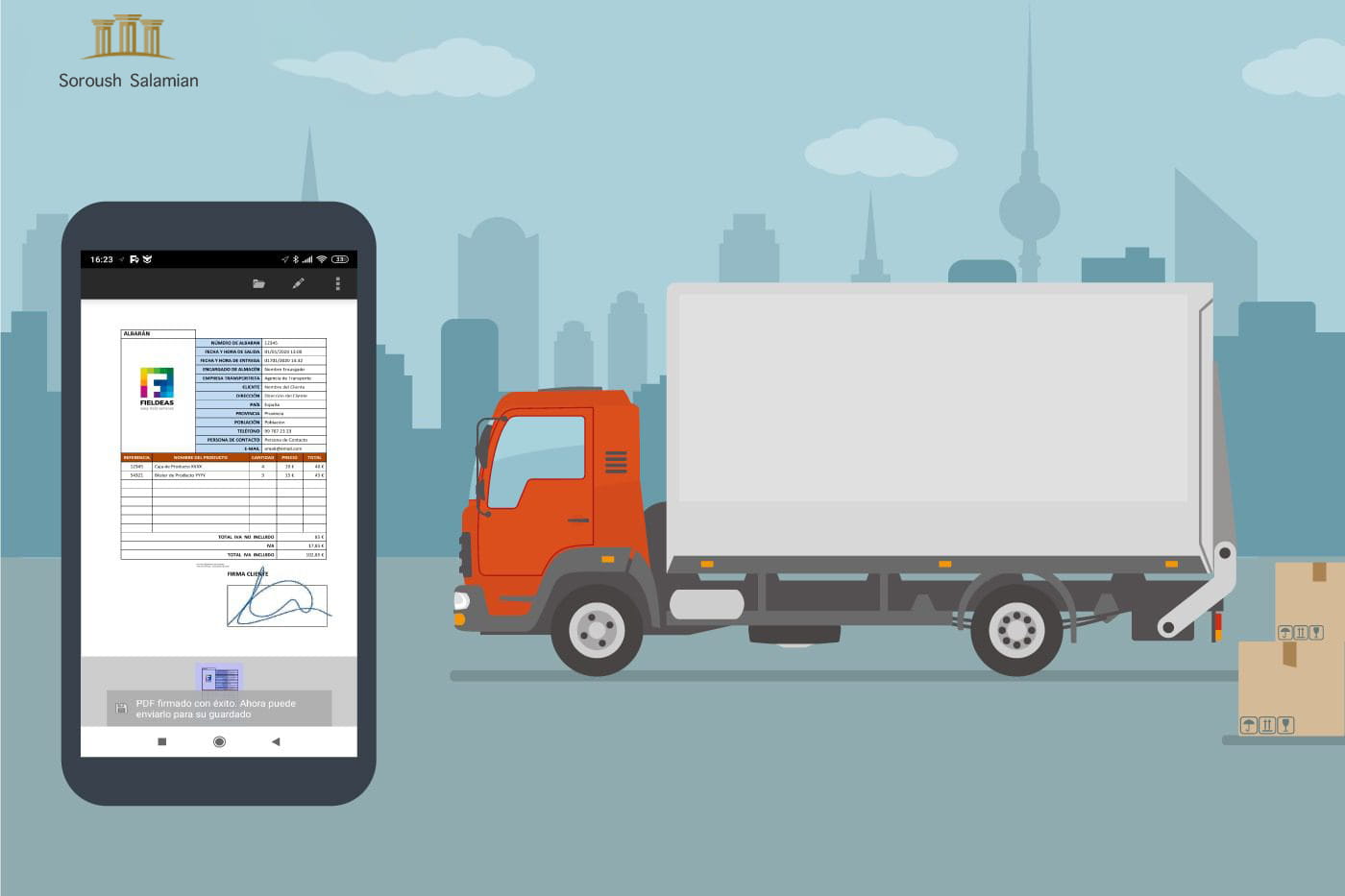
Electronic Transport Documents and Their Impact on Document Loss and Cargo Delivery
The expansion of electronic commerce has gradually encouraged the transition from paper-based transport documents to digital formats.
Using instruments such as electronic bills of lading in international transactions can reduce dependence on the physical transfer of documents and facilitate the transmission, receipt, and tracking of shipment information.
However, a distinction must be made between a legally valid electronic transport document and a scanned image of a paper document.
A digital image may help review information and maintain records,. Still, it does not necessarily replace an original bill of lading when the original must be presented to claim delivery of the goods. The legal validity of electronic transport documents should therefore be assessed in consultation with a qualified legal professional.
For electronic transferable records, the relevant legal considerations extend beyond the digital storage of information.
For example, the UNCITRAL Model Law on Electronic Transferable Records (MLETR) emphasizes requirements such as identifying the electronic record, preserving data integrity, and using a reliable method to establish control over the document.
This framework was developed to facilitate the electronic use of instruments such as transferable bills of lading. However, the Model Law does not automatically constitute binding legislation in every country.
The validity and legal effects of an electronic transport document must be determined by reference to the legislation adopted in the relevant jurisdiction, the type of document, and the contractual terms.
From a liability perspective, electronic platforms may reduce the risk of losing physical originals and the difficulties of transferring paper documentation. However, they do not eliminate all legal risks.
Loss of access to a user account, system disruptions, failures in recording the transfer of control, or uncertainty concerning the authenticity and integrity of electronic information may still interfere with the delivery of goods.
Consequently, before relying on an electronic document, the parties should determine whether the platform satisfies the applicable legal and contractual requirements and whether the carrier can reliably establish the recipient’s entitlement through that system.
Liability for Delivering Goods to an Unauthorized Party
One of the most serious risks of lost transport documents is delivering goods to someone not legally entitled to receive them.
This situation may arise where a carrier releases cargo without adequate verification, relying solely on a scanned document, an invalid authorization letter, or a verbal request.
In such circumstances, the party legally entitled to the goods may dispute the delivery or pursue compensation against the responsible parties.
The basis and extent of liability depend on factors such as the type of transport document, the carrier’s obligations, identity verification procedures, the existence of valid delivery instructions, contractual provisions, and applicable regulations.
Where the carrier has acted contrary to statutory or contractual requirements, a liability claim may be brought against it.
To reduce this risk, carriers should distinguish between verifying a person’s identity and establishing that person’s legal entitlement to receive the cargo.
Confirming identity alone does not establish that the person possesses the necessary legal or contractual authority to take delivery of the shipment.
Where a negotiable document is involved, examining the status of the lawful holder and the rights of other interested parties becomes particularly important.
It is also essential to preserve records of the decision-making process.
Maintaining records of delivery requests, documents examined, confirmations obtained, correspondence with the consignor and cargo owner, and final delivery receipts can play an important role in resolving subsequent disputes.
Nevertheless, maintaining records does not replace compliance with legal requirements. Instead, it helps demonstrate the measures the parties took.
How to Claim Compensation for Losses Resulting from Missing Transport Documents
To claim compensation for losses arising from missing transport documents, you must first identify the nature of the damage and establish its connection to the loss of the document.
Potential losses may include direct expenses such as storage charges and administrative costs, as well as other financial losses recoverable under applicable law and contractual provisions.
However, not every claimed expense is necessarily compensable, and each item of damage must be supported by sufficient evidence.
The first step is to collect documentation relating to the contract of carriage and the missing transport document.
Available copies of the bill of lading, the contract of carriage, commercial invoices, packing lists, delivery receipts, correspondence, loss reports, and expense records may help establish the relevant facts.
If the loss of the document has suspended delivery, also document the cargo’s arrival date, the date the loss was reported, the duration of the delay, and the measures taken to resolve the problem.
The next step is to determine who had possession of the document and whether that party was obligated to safeguard or deliver it.
Next, examine the legal basis of the claim, contractual provisions, applicable law, and any limitations of liability.
In international transportation disputes, identifying the governing law and determining which international conventions apply are particularly important.
Submitting a written claim to the potentially responsible party or company, providing a detailed account of the incident, specifying the amount of compensation sought, and presenting supporting evidence can help establish a clear basis for resolving the dispute.
If the matter cannot be resolved through negotiation, the parties may consider legal proceedings before the competent court or another agreed dispute resolution forum, in accordance with the contract and applicable regulations.
In international cases, pay particular attention to contractual and statutory time limits. Delays in notifying the relevant parties of the damage or initiating legal proceedings may affect the ability to recover compensation.
Preventive Measures to Avoid the Loss of Transport Documents
Preventing the loss of transport documents requires clearly defined responsibilities for receiving, safeguarding, transferring, and archiving documentation.
Transportation companies and cargo owners can reduce the risk of missing documents and delivery-related disputes by establishing systematic document control procedures.
The following measures may be effective:
- Record the details of each transport document, including its reference number, date of issuance, document type, and number of copies issued.
- Designate a specific person responsible for receiving and safeguarding original documents and recording each transfer.
- Create legible digital copies of documents and store them securely as backup records, while recognizing that a digital image does not necessarily replace an original negotiable document.
- Obtain written acknowledgments whenever you transfer documents to employees, representatives, freight forwarders, or banks.
- Notify the relevant parties promptly and in writing if a document is lost.
- Suspend delivery where the recipient’s entitlement cannot be reliably established and pursue an appropriate legal solution.
- Include clear contractual procedures for reporting lost documents, cooperation between the parties, providing guarantees, and allocating costs arising from delays.
- Review the applicable contractual and statutory deadlines for reporting damage and initiating legal claims.
Using document management systems and maintaining detailed document-tracking records can reduce the likelihood of human error.
Nevertheless, converting paper documents into digital images does not, by itself, alter the legal status of an original bill of lading.
The validity and permissible use of electronic transport documents must be assessed under the relevant legal provisions and the parties’ agreements.

Liability for Lost Transport Documents and the Delivery of Goods
The loss of transport documents may affect the evidentiary status of the contract of carriage, the verification of entitlement to receive goods, and the timing of delivery. However, its legal consequences depend on the type of document and the applicable legal framework.
In the case of a negotiable maritime bill of lading, possession and presentation of the original document may be decisive in establishing entitlement to claim the cargo.
In international road transportation governed by the CMR Convention, the loss of a consignment note does not, by itself, invalidate the contract of carriage.
Liability for compensation must also be assessed against each party’s obligations, the cause of the loss, the extent of the damage, and the causal link between the relevant conduct and the resulting harm.
The mere loss of a transport document does not automatically establish liability for the carrier or the cargo owner.
Furthermore, delivering goods without adequately verifying the recipient’s entitlement may create additional disputes and legal liabilities.
To manage these situations effectively, promptly record and report any lost document to the relevant parties. Examine alternative documentation and available legal remedies, and deliver only after the necessary requirements have been met.
Clear contractual arrangements, systematic tracking of transport documents, and the preservation of reliable records are among the most important measures for minimizing legal and financial risks in transportation transactions.
Frequently Asked Questions About Liability for Lost Transport Documents
No. Losing a transport document and physically losing goods are two distinct matters. The cargo may have arrived at its destination while the document required for delivery remains unavailable. The legal consequences of this situation depend on the type of document and the applicable regulations.
The responsible party is determined by examining who had possession of the document, what obligations that party had regarding its safekeeping, and how the loss occurred. Depending on the circumstances, the carrier, consignor, consignee, or their representatives may be held liable.
This depends on the type of bill of lading, applicable regulations, and contractual provisions. In the case of a negotiable maritime bill of lading, the original document may be required to claim delivery of the goods. If the original is lost, consider appropriate legal procedures and acceptable guarantees. A scanned copy does not always constitute a valid substitute for the original.
In international road transportation governed by the CMR Convention, Article 4 provides that the absence or loss of the consignment note does not affect the existence or validity of the contract of carriage. However, verifying the recipient's entitlement and complying with the applicable delivery requirements remain necessary.
Potential damages may include delivery delays, storage charges, administrative expenses, and certain financial losses resulting from disruptions to commercial operations. Whether such damages are recoverable depends on proof of loss, causation, contractual provisions, and applicable regulations.
The loss should be documented and promptly reported to the relevant parties. Review transportation records and available copies, and verify the recipient's entitlement before releasing the cargo. Where necessary, arrangements for a replacement document or an appropriate guarantee should be made through procedures permitted by the applicable law and contract.
Not in all cases. A scanned copy may help you review information and maintain records. Still, it does not necessarily replace an original negotiable document unless the governing regulations and relevant conditions allow that substitution. The specific document requirements must be examined before delivery. Does the loss of a bill of lading mean that the goods themselves have been lost?
Who is responsible for the loss of transport documents?
Can goods be released without the original maritime bill of lading?
Does the loss of a road consignment note invalidate the contract of carriage?
What types of damages may arise from the loss of a transport document?
What steps should be taken after a transport document is lost?
Is a scanned copy of a bill of lading sufficient for the delivery of goods?