Applications, Legal Validity, and Key Considerations of Electronic Bills of Lading in International Transactions
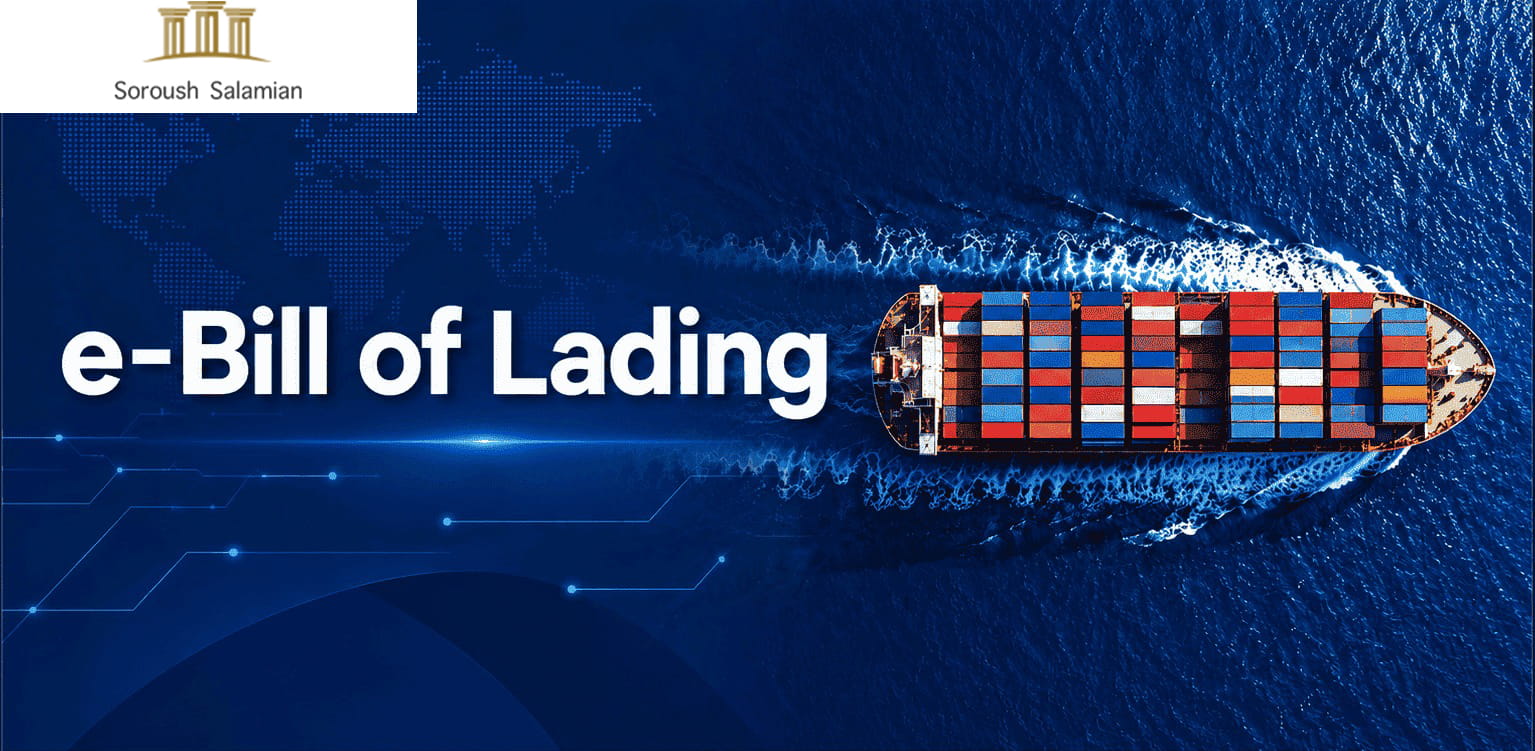
In international trade, transferring goods from a seller to a buyer typically depends on a range of commercial, transportation, insurance, and customs documents. The bill of lading is one of the most important documents in this process. It records information concerning the shipment of goods and, depending on its type, may serve as a receipt for goods, evidence of a contract of carriage, and, in certain circumstances, a transferable document of title. With the expansion of digital commerce, electronic bills of lading in international transactions have emerged as a way to reduce reliance on paper documents and expedite commercial transactions.
However, using a digital bill of lading does not necessarily mean all countries, banks, and customs authorities will accept it. The type of bill of lading, the governing law, the destination country’s regulations, the terms of any documentary credit, and the electronic system through which the document is issued all influence its acceptance. This article examines the different types of electronic bills of lading, their advantages, the relevant international legal frameworks, and the key considerations that exporters, importers, and transportation companies should evaluate before using these documents.
What Is an Electronic Bill of Lading in International Transactions?
An Electronic Bill of Lading, commonly referred to as an eBL, is a digital form of a maritime bill of lading that records information concerning the goods, consignor, consignee, carrier, port of loading, and destination in an electronic record. This document may be used to transport goods from one country to another and, provided the relevant legal and technical requirements are met, may perform certain legal functions traditionally associated with a paper bill of lading.
An electronic bill of lading should not be considered equivalent to every digital file containing shipment information. For example, a scanned copy of a paper bill of lading, a PDF document transmitted by email, and a transferable electronic bill of lading managed through a specialized platform may have different legal and operational characteristics.
This distinction is particularly significant in international transactions. Certain bills of lading merely record transportation information, whereas a transferable maritime bill of lading may also be used to transfer rights associated with the goods. In the latter case, the electronic system must provide a mechanism for exclusive control of the document and its legally effective transfer to another party. Accordingly, before selecting an electronic bill of lading, it is essential to determine the document’s intended functions, the legal framework governing its issuance, and whether the parties to the transaction and the relevant authorities will accept it.
Types of Electronic Bills of Lading and Transport Documents in International Trade
In international transactions, the term electronic bill of lading may refer to various transport documents. However, these documents are not necessarily equivalent in their legal status or operational functions. Identifying the appropriate document type is the first step toward selecting a suitable transportation method and preventing potential disputes.
An Electronic Bill of Lading (eBL) is used in maritime transportation. Where the necessary conditions are satisfied, and the document is legally recognized, it may serve not only as evidence of receipt of the goods and the contract of carriage but also as a transferable document of title. Its ability to facilitate the transfer of rights relating to goods makes it an important instrument in maritime trade and trade finance.
The electronic consignment note for international road transport, known as e-CMR, relates to the international carriage of goods by road. This document is used under the Convention on the Contract for the International Carriage of Goods by Road (CMR) and the Additional Protocol concerning the electronic consignment note. Its primary purpose is to record information concerning the road carriage contract and the shipment details. Its legal functions should not be equated with those of a transferable maritime bill of lading without examining the applicable regulations.
Electronic transport documents are also used in air and rail transportation in accordance with the rules and practices governing each mode of transport. In addition, multimodal transport documents may cover the movement of goods through a combination of road, sea, rail, or air transportation. Consequently, the choice of transport document should match the transportation method, international route, nature of the transaction, and the legal requirements of the countries involved.

Legal Validity of Electronic Bills of Lading in International Transactions
One of the principal questions trading companies raise is whether an electronic bill of lading has the same legal validity as a paper bill of lading. The answer depends on the jurisdiction considering the matter, the law governing the document, the type of bill of lading, and the regulations governing the transfer of rights.
In 2017, the United Nations Commission on International Trade Law (UNCITRAL) adopted the Model Law on Electronic Transferable Records (MLETR). This framework was developed to facilitate the legal recognition and use of electronic transferable records in domestic and cross-border transactions. Transferable bills of lading are among the instruments that may fall within the scope of this Model Law.
The MLETR emphasizes principles such as non-discrimination against the use of electronic means, functional equivalence, and technological neutrality. Under this approach, an electronic record may perform the legal functions of a transferable paper document if it meets the applicable requirements. However, the UNCITRAL Model Law does not automatically constitute binding legislation in every country. Individual jurisdictions must incorporate its provisions into their domestic legal systems or enact other compatible legislation.
According to information published by UNCITRAL, as of the date of this article, several countries and jurisdictions have adopted legislation based on or influenced by this framework. Each jurisdiction’s specific provisions and the effective dates of the relevant legislation must be examined separately. Therefore, before relying on an electronic bill of lading in an international transaction, you must determine the applicable law and the conditions the relevant authorities in the destination country impose for recognizing and accepting the document.
What Are the Benefits of Electronic Bills of Lading for Exporters and Importers?
Electronic bills of lading can simplify much of the administrative and operational work involved in international trade. Under traditional procedures, preparing, signing, dispatching, and receiving physical documents may require considerable time. Delays in receiving the original bill of lading can also create difficulties in customs clearance or the delivery of goods.
Through an appropriate electronic platform, authorized parties can access document information more efficiently. This can reduce printing costs, international courier expenses, physical document storage requirements, and the administrative burden of tracking documents. Access to records of document issuance and transfer may also facilitate more systematic information management.
Furthermore, reducing the need for manual data entry may decrease the likelihood of certain administrative errors. When the electronic platform integrates with other supply chain management systems, transportation information may become more readily accessible across different stages of the transaction.
Electronic bills of lading in international transactions may also provide operational advantages for companies handling large volumes of shipments and dealing with numerous commercial counterparties. Nevertheless, realizing these benefits depends on the quality of the electronic platform, coordination among the parties, and acceptance of the document within the relevant procedures.
Digitalization alone does not resolve every challenge associated with international trade. If a bank, buyer, transportation company, or destination authority cannot examine the document in the agreed electronic format, alternative procedures or paper documentation may still be required.
The Role of Electronic Bills of Lading in Documentary Credits and International Payments
In certain international transactions, payment for goods is made through documentary credits or other payment arrangements that require the presentation of specified documents. In such transactions, buyers and sellers must agree not only on the goods and their price but also on the documents required to obtain payment or secure delivery.
Where a contract or documentary credit requires presentation of a paper bill of lading, do not assume an electronic file will be accepted without amending the relevant terms. The document’s form, method of presentation, signature requirements, and other applicable conditions must comply with the credit terms and the agreed rules.
The International Chamber of Commerce (ICC) has published the eUCP, a supplement to the Uniform Customs and Practice for Documentary Credits. Where incorporated into a documentary credit, these rules establish a framework for the electronic presentation of documents alongside the UCP provisions. However, the eUCP does not independently guarantee that every electronic bill of lading will be accepted in every transaction. The documentary credit terms and the participating banks’ ability to examine electronic records remain essential considerations.
In practice, exporters should confirm the acceptable document format with the issuing bank, advising bank, or other relevant parties before shipping the goods. Importers should likewise structure payment terms to prevent inconsistencies between the type of bill of lading, the timing of document presentation, and the procedures for releasing the goods.
Coordination from the outset can help prevent discrepancies in document presentation and reduce the risk of situations in which goods have already been shipped. However, the documents required for payment or customs clearance may still be rejected.
Techmay still beal and Legal Requirements for Using Electronic Bills of Lading
For an electronic bill of lading to be used reliably in international transactions, recording shipment information in a digital file is not sufficient. The electronic platform and issuance procedures must include mechanisms to identify the document, verify its authenticity, and manage changes to its contents.
One essential requirement is data integrity. Records should be maintained so authorized and unauthorized modifications can be identified and examined. It should also be possible to establish when the document was issued, who created it, and what modifications were made during transit.
For transferable bills of lading, another important requirement is exclusive control of the document. If the bill of lading is intended to function as a transferable instrument, it must include a reliable mechanism to identify the party exercising control over the electronic record and to facilitate its transfer to another party. Merely distributing copies of a digital file to multiple recipients does not establish this requirement.
Data retrievability, secure user access, maintenance of transfer records, and clearly defined procedures for amending or canceling a document are also important considerations. Electronic signatures may help verify identity and attribute a document to a particular person. However, the type of electronic signature and its level of legal recognition must comply with the regulations governing the transaction.
Beyond technical requirements, the parties should agree on the electronic platform to be used, the governing law, the method of transferring the document, and procedures for resolving disputes. Evaluating these matters before transportation begins can help prevent complications that may be much harder to resolve after the goods have been dispatched.
Differences Between Electronic Bills of Lading, Paper Bills of Lading, and Scanned Copies
The main distinction between an electronic bill of lading and a paper bill of lading is not merely the document’s physical or digital form. With a paper bill of lading, possession and control of the original document, and its physical transfer, may be legally significant for certain purposes. By contrast, a transferable electronic bill of lading must use a reliable method to establish control and facilitate the transfer of rights associated with the document in a digital environment.
A scanned copy of a paper bill of lading is different from a transferable electronic bill of lading. A scanned document is generally an image of the original paper document and does not necessarily provide a mechanism for exclusive control, transfer of rights, or recording modifications. Consequently, sending an image of a bill of lading by email or through a messaging application does not, by itself, constitute a legally recognized substitute for the original document in all transactions.
However, this does not mean that scanned documents are invariably invalid. A scanned copy may be acceptable for informational purposes, preliminary examination, or certain administrative procedures. The extent of its acceptance depends on the applicable regulations, contractual provisions, and purpose for which the document is presented.
Similarly, an electronic bill of lading should not automatically be considered legally equivalent to a paper bill of lading in every country without examining the conditions governing its issuance and acceptance. Some legal systems have specific legislation for electronic transferable records, while others may still impose restrictions.
To avoid uncertainty, trading companies should clarify before entering into a transaction whether the term electronic bill of lading refers to an original electronic record, a scanned image of a paper document, or a non-transferable electronic transport document. The legal and operational functions of each type should also be determined in relation to the intended transaction.
Challenges and Risks of Using Electronic Bills of Lading in International Trade
Despite their numerous advantages, electronic bills of lading present certain challenges in international transactions. One of the most significant concerns is the variation in laws, regulations, and administrative practices among countries and organizations involved in international trade. A document may be legally recognized in one jurisdiction but may not be accepted for the same purpose in another country or by a particular bank or transportation company.
A second challenge concerns interoperability between electronic platforms. Where exporters, carriers, buyers, banks, and other parties use different systems that cannot exchange information or recognize each other’s records, the benefits of digitalization may be reduced. Even when an electronic document exists, a lack of operational compatibility may require duplicate data entry or the creation of alternative documentation.
Information security is another essential consideration. Unauthorized access, theft of login credentials, unauthorized data modification, or disruptions in platform availability may interfere with the transaction. Accordingly, selecting a reliable electronic platform and maintaining recoverable records are necessary measures.
In some transactions, insufficient familiarity among personnel with digital procedures or inconsistencies between contractual terms and the selected document type may also create difficulties. For example, if a documentary credit or contract of carriage is not properly aligned with electronic document presentation, payment or delivery delays may occur.
To manage these risks, confirm acceptance of the electronic document by all relevant parties before shipment, clearly allocate responsibilities for issuance and transfer, and establish contingency procedures for exceptional circumstances.
Checklist for Using Electronic Bills of Lading in International Transactions
Before using an electronic bill of lading, exporters, importers, and transportation companies should examine several essential matters. These measures help ensure the selected document matches the transaction’s requirements, the regulations for the transportation route, and the agreed payment terms.
- Identify the document type: Determine whether the transaction requires a transferable maritime bill of lading, an e-CMR road consignment note, an air transport document, or a multimodal transport document.
- Examine the governing law: Identify which country’s law governs the document and the transfer of associated rights, and determine whether the applicable legislation recognizes electronic records for the intended purpose.
- Confirm acceptance by the parties involved: Inform the buyer, seller, transportation company, bank, and other relevant authorities of the document format and presentation method.
- Review the payment terms: If a documentary credit is used, its terms and, where applicable, the eUCP rules should be consistent with electronic document presentation.
- Evaluate the issuance platform: Consider the platform’s identity-verification capabilities, document-control mechanisms, modification records, data-recovery procedures, and ability to verify transfer history.
- Clarify responsibilities: Establish who is authorized to issue the document, which parties may amend it, and what procedures will apply in the event of errors or technical disruptions.
- Maintain supporting documentation: Ensure that the sales contract, contract of carriage, correspondence, relevant receipts, and records of document verification remain accessible.
Electronic bills of lading can make international trade procedures faster and more systematic. However, their effective implementation depends on legal, technical, and contractual coordination. Addressing these considerations before shipment can reduce the cost of correcting errors and minimize the likelihood of disputes during subsequent stages of the transaction.
Frequently Asked Questions About Electronic Bills of Lading in International Transactions
An electronic bill of lading is a digital document used to record information concerning the transportation of goods in international trade. Where the necessary legal and technical requirements are satisfied, an electronic maritime bill of lading may also function as a transferable document of title in addition to recording transportation information.
No. The legal validity and effects of an electronic bill of lading depend on the governing law, the document type, national regulations, and the transaction terms. Before using an electronic bill of lading, its acceptance in the relevant countries and by the parties involved in the transaction should be verified.
A scanned copy is generally an image of a paper document. In contrast, a transferable electronic bill of lading may be created and managed through a specialized electronic platform that enables control and transfer of the document. The legal validity and functions of each must be evaluated in accordance with the applicable regulations.
The UNCITRAL Model Law on Electronic Transferable Records (MLETR) was adopted in 2017 and provides a framework for the legal recognition of electronic transferable records, including transferable bills of lading. The Model Law is not automatically binding in every country. The applicable domestic legislation of each jurisdiction must be examined.
Acceptance depends on the terms of the documentary credit, the agreed rules, and the bank's ability to examine electronic records. The International Chamber of Commerce's eUCP rules provide a framework for the electronic presentation of documents, provided that they have been incorporated into the relevant documentary credit.
An e-CMR is an electronic consignment note used in international road transportation and is governed by the applicable international road transport framework. An electronic maritime bill of lading relates to sea transportation and, where the requirements are satisfied, may also function as a transferable document of title.
The type of document, governing law, acceptance by the buyer and seller, banking and customs requirements, verification capabilities, methods of document control and transfer, and procedures for maintaining records should all be examined. Coordinating these matters before shipment helps prevent disputes and delays. What is an electronic bill of lading in international transactions?
Are electronic bills of lading legally valid in all countries?
What is the difference between an electronic bill of lading and a scanned copy of a bill of lading?
How does the MLETR relate to electronic bills of lading?
Can a bank accept an electronic bill of lading under a documentary credit?
What is the difference between an e-CMR and an electronic maritime bill of lading?
What should be considered before using an electronic bill of lading?