Responsibility of the Insurance Company in Maritime Transportation
In maritime transportation, the insurance company plays a fundamental role in managing financial risks arising from accidents, losses, and unforeseen events. The insurer’s responsibility is defined by the terms of the marine insurance policy and extends only to losses that fall within the agreed scope of coverage. This responsibility does not constitute a guarantee of the absolute safety of the cargo or vessel. Rather, it represents a conditional obligation triggered by insured perils.
Upon a covered incident, the insurer must assess the claim and indemnify the insured in accordance with the contractual terms and applicable legal standards. A clear understanding of these principles is essential for cargo owners and transportation stakeholders, as many disputes arise from misconceptions regarding the scope of the insurer’s liability. The insurer’s responsibility is always dependent upon policy wording, coverage type, exclusions, and compliance with notification requirements, and cannot be interpreted as unlimited or absolute.
The Position of Marine Insurance in the Transportation Chain
Marine insurance constitutes a central pillar of the international transportation chain and complements the obligations of shipping companies and cargo owners. While the carrier is responsible for the proper performance of transportation services, the insurer provides financial protection against unavoidable or unforeseen risks.
Without marine insurance, losses resulting from sinking, collision, fire, or cargo damage could render large-scale maritime commerce commercially impractical. By assuming defined risks, insurers enable economic planning and commercial certainty for traders and logistics operators.
Types of Insurance Coverage in Maritime Transportation
The insurer’s responsibility varies depending on the selected coverage. Policies may cover total loss, partial loss, natural hazards, vessel collision, fire, grounding, theft, or cargo disappearance. Some policies are limited to specifically named perils, while others provide broader protection.
The chosen coverage directly determines the scope of the insurer’s liability. If a loss results from a risk outside the insured scope, the insurer has no obligation to indemnify. Therefore, careful review of coverage clauses is essential when procuring marine insurance.

Core Obligations of the Marine Insurer
The primary obligation of the insurer is to indemnify the insured upon the occurrence of an insured peril, subject to policy terms. This includes investigating the incident, evaluating the loss, and paying within a reasonable period.
The insurer must also provide transparent information regarding coverage conditions, exclusions, and claims procedures. Any lack of clarity may give rise to legal responsibility. However, the insurer’s duty remains confined to the contractual provisions and does not extend beyond what is expressly agreed.
Limits of Insurer Liability for Cargo Damage
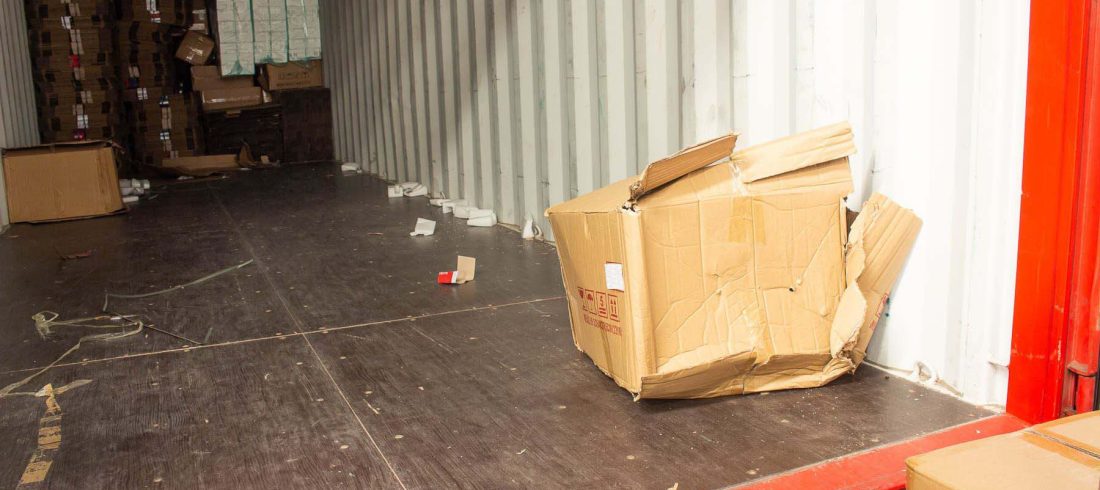
The insurer’s liability is limited to the insured value stated in the policy. Compensation cannot exceed this amount. Furthermore, the loss must be direct and demonstrable. Indirect commercial losses or lost profits are typically excluded unless explicitly covered.
Timely notification of loss is a fundamental condition for the insurer’s liability to arise. The insured must promptly inform the insurer upon becoming aware of the incident. Delayed notification may result in reduced or denied indemnity. When notice is properly and timely provided, the insurer is obligated to process the claim in accordance with the policy.
Exclusions from Marine Insurance Liability
Marine insurance policies contain specific exclusions. Losses resulting from intentional misconduct, improper packaging, inherent vice of the goods, or violations of safety regulations are commonly excluded. Certain risks may only be covered through a special endorsement.
Awareness of these exclusions is critical to preventing disputes, as many insurance disputes stem from misunderstandings of policy limitations.

Insurer Responsibility in Major Maritime Incidents
In large-scale maritime incidents such as vessel sinking or extensive cargo damage, the insurer’s role becomes particularly significant. The insurer must carefully investigate the circumstances and determine the amount payable for the loss in accordance with the policy terms.
Although such claims may require extended evaluation, the insurer’s contractual obligations remain enforceable. Transparency and cooperation between parties are essential in complex cases.
Relationship Between Insurer Responsibility and Shipping Companies
The insurer’s liability is legally distinct from that of the shipping company, although the two may intersect in practice. After indemnifying the insured, the insurer often acquires rights of recourse against the responsible party. This mechanism promotes legal balance within the transportation framework.
The existence of insurance does not eliminate the carrier’s responsibility; rather, it reallocates financial risk while preserving accountability.
The Role of Documentation in Establishing Insurer Liability
Accurate documentation is crucial in activating insurer responsibility. Essential documents typically include the bill of lading, damage reports, discharge records, and the insurance policy itself. Missing or incomplete documentation may delay or jeopardize compensation.
The insurer is entitled to evaluate claims based on the submitted evidence and may lawfully deny payment if documentation is insufficient.
Resolution of Disputes Between Insured and Insurer
Disputes concerning insurer responsibility are commonly resolved through negotiation, arbitration, or judicial proceedings. The dispute-resolution mechanism specified in the policy is significant, as insurance disputes often require technical and legal expertise.
Many conflicts can be prevented through clear contractual drafting and careful review of policy terms.
Conclusion
The insurance company’s role in maritime transportation is critical to safeguarding the economic stability of international trade. This responsibility is limited, conditional, and strictly governed by policy provisions. Selecting appropriate coverage, providing timely notification, and understanding policy exclusions are essential elements in effectively utilizing marine insurance.
Marine insurance is a risk management tool, not a guarantee of risk elimination.
Frequently Asked Questions Regarding the Responsibility of Insurance Companies in Maritime Transportation
No. Marine insurance only covers losses that fall within the specific risks defined in the policy. If a loss arises from an excluded peril or from circumstances not insured under the contract, the insurer is not obligated to provide compensation. Careful review of coverage clauses and exclusions is essential before relying on insurance protection.
Timely notification is a fundamental condition under most marine insurance policies. Failure to provide prompt notice may result in reduction or denial of the claim, particularly if the delay prevents proper investigation or increases the extent of the loss. Immediate written notice to the insurer is therefore strongly recommended.
Yes. After indemnifying the insured, the insurer generally acquires the right of subrogation, allowing it to pursue recovery from the party legally responsible for the loss, including the shipping company. This right does not affect the insured’s initial entitlement to compensation under the policy. Does marine insurance cover all types of cargo damage?
What happens if I fail to notify the insurer promptly after discovering a loss?
Can the insurer recover the compensation paid from the shipping company?