
What Are Cargo Insurance Claims and Why Do They Matter?
Cargo insurance claims refer to legal disputes and claims that arise between the insured, the insurance company, cargo owners, or other parties involved in the transportation of goods. These disputes typically occur when cargo is damaged in transit, a portion of the shipment is missing, or there is a disagreement over the method and amount of compensation payable by the insurer. Given the significant volume of domestic and international trade, cargo insurance is one of the most important risk‑management tools, playing a vital role in protecting cargo owners’ financial interests.
The importance of cargo insurance claims becomes clearer when we consider that many shipments carry high commercial value, and a single incident can result in substantial losses. In such cases, understanding the legal procedures and the rights and obligations of all parties becomes crucial. If a cargo owner is unaware of their rights, they may fail to obtain full compensation or miss essential legal deadlines.
Insurance companies, on the other hand, act in accordance with policy terms and applicable laws. In many cases, disputes arise between the parties over the amount of indemnity or whether the incident is covered under the policy. For this reason, cargo insurance claims are a key topic in transport and insurance law, and familiarity with them is essential for cargo owners, importers, exporters, and logistics professionals.
Main Causes of Cargo Insurance Disputes
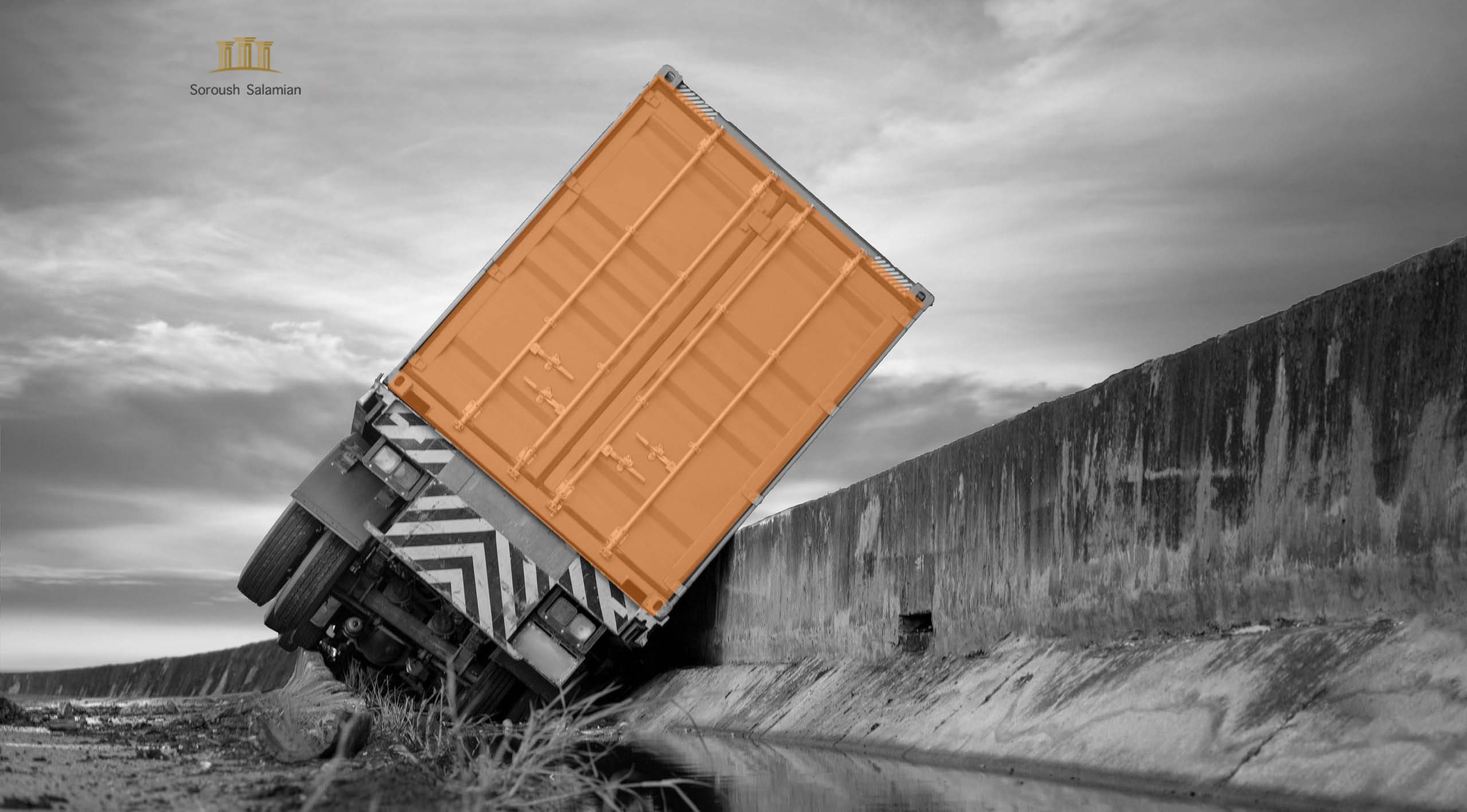
Cargo insurance disputes typically arise following loss or damage to goods or due to disagreement over the method of compensation. One of the most common causes is physical damage to cargo during transit. Accidents, vehicle overturning, water ingress, fire, theft, and natural disasters are among the events that can cause loss or damage.
Sometimes the dispute concerns the amount of loss. The cargo owner may believe the actual loss exceeds the insurer’s assessment. In other cases, the insurer may argue that the incident falls outside the policy coverage and therefore refuse payment.
Another major cause is a lack of documentation. Failure by the insured to provide the required documents or to submit accurate information at the time of policy issuance may later lead to disputes. Delayed notice of loss also creates legal complications.
Disagreements may also arise from special conditions or exclusions in the policy-many insureds do not thoroughly review the terms and later discover that the loss was excluded from coverage. Therefore, careful review of the insurance policy can significantly reduce cargo insurance disputes.
Parties Involved in Cargo Insurance Claims
Several parties may be involved in cargo insurance claim proceedings, each with distinct rights and responsibilities. The most important party is the insured or cargo owner who purchases insurance to protect their property. The insurance company is another key party and is obligated to indemnify covered losses in accordance with the policy.
In some cases, the carrier also plays a central role. If the loss results from the carrier’s negligence, the insurer may pay the insured and then pursue the carrier through subrogation. This process is very common in international transport disputes.
Official experts and loss adjusters also play a significant role. Their professional reports often form the basis of decisions made by insurers or judicial authorities. Lawyers, courts, arbitral tribunals, and inspection companies may also be involved during the dispute‑resolution process.
Understanding the role of each party helps ensure better protection of legal rights and facilitates more effective dispute resolution.
Liability of the Insurer in Cargo Insurance Claims
Under the insurance contract and policy terms, the insurer is responsible for indemnifying losses that fall within the scope of coverage. The insurer must thoroughly investigate the incident after receiving the notice of loss, review the documents, and, if necessary, appoint loss adjusters. These investigations aim to determine the cause of the incident and the actual amount of loss. If the loss is proven to be covered, the insurer is obligated to pay compensation in accordance with the policy.
However, the insurer’s liability is not absolute. If the loss results from fraud, misrepresentation, or events excluded from international cargo policy coverage, the insurer may deny the claim. Many policies include specific exclusions that must be considered. Transparency, timely processing, and compliance with contractual obligations are among the essential duties of insurers. Any failure in these obligations may give rise to cargo insurance claims.

Role of the Insured in Preventing Cargo Insurance Disputes
The insured plays a critical role in preventing cargo insurance disputes. Many disagreements arise from incomplete information, misunderstandings of policy terms, or failures to meet legal obligations. Accurate information must be provided at the time the policy is issued-such as cargo specifications, true value, packaging, and route. Any mistake or concealment may lead to disputes at the time of loss.
The insured must also thoroughly read the policy terms. Many people purchase insurance without understanding the coverage, limitations, and exclusions. Prompt notice of loss is also essential; delays complicate the process and may even result in loss of rights. Proper record‑keeping and compliance with legal obligations significantly reduce the likelihood of cargo insurance disputes.
Required Documents for Filing Cargo Insurance Claims
Complete documentation is critical in cargo insurance claims. The more comprehensive the evidence, the faster the process and the higher the chances of successful recovery.
Key documents include:
- The cargo insurance policy (showing coverage and obligations).
- Transport documents such as bills of lading and waybills.
- Commercial invoice, packing list, and customs documents.
- Survey reports, photos, loss reports, and the carrier’s incident reports.
Lack of even one of these documents can complicate recovery in international cases. For this reason, cargo owners must keep all relevant documents organized from the beginning of the shipment.
Legal Stages of Cargo Insurance Claims
The process usually begins with the insured’s prompt notice of loss. The insurer then investigates the incident and assesses the amount of damage. Many disputes are resolved at this stage through negotiation. If the parties reach an agreement, the case is settled without court proceedings.
If not, the claimant may pursue litigation or arbitration, depending on the policy or transport contract. International contracts often include arbitration clauses.
During proceedings, expert reports are central to determining the cause and extent of loss. After document review and hearings, the designated authority issues a final decision.
Legal Time Limits in Cargo Insurance Claims
Time limits are a crucial component of cargo insurance claims. Many cargo owners mistakenly believe they can file a claim at any time, but various laws and contracts impose strict deadlines.
The first critical deadline is the notice of loss, which must be submitted promptly-usually immediately after the incident. Delays may hinder the investigation and affect the insured’s rights.
International transportation regulations also set specific limitation periods depending on the mode of transport and governing convention. Failure to act within the prescribed timeframe may result in loss of the right to claim.

Role of Loss Adjustment in Cargo Insurance Claims
Loss adjustment is one of the most critical stages of cargo insurance claims. Disputes often revolve around the cause of damage or the actual amount of loss. Loss adjusters assess the condition of the cargo, the cause, the extent of damage, and the circumstances of the incident based on documents, inspections, and technical analysis. Their reports often form the basis for insurer decisions or judicial/arbitral rulings.
How Cargo Insurance Claims Are Resolved in International Transport
Cargo insurance disputes in international transport are more complex due to differing laws, multiple parties, and international contractual frameworks. Contracts often specify the governing law and jurisdiction. Arbitration is widely used in international trade because it is faster and more specialized.
International conventions, transport documents, policies, and survey reports play significant roles in determining liability. Because international cargo often has high value, claims may involve significant sums. Accurate contract drafting and familiarity with international law are therefore essential.
How to Prevent Cargo Insurance Claims
Prevention is always easier than legal action. Many cargo insurance disputes can be avoided by following simple steps:
- Selecting an appropriate insurance policy and understanding its terms.
- Proper packaging of goods.
- Choosing reliable carriers and preparing accurate documents.
- Prompt notice of loss and full cooperation with surveyors.
- Obtaining legal advice for major transactions.
These measures reduce legal risk and enhance financial security in domestic and international trade.
Frequently answer questions on Cargo Insurance Claims
Cargo insurance claims refer to legal actions and demands related to losses affecting insured goods during transport. They arise when goods are damaged, lost, or when disagreements occur regarding compensation between the insured and the insurer.
A claim may be filed when the insurer refuses to pay compensation, assesses the loss below its actual value, or disputes whether the incident falls within the coverage of the insurance policy.
Important documents typically include the insurance policy, bill of lading, commercial invoice, survey or loss reports, port or terminal reports, photographs of the damage, and written correspondence with the insurance company.
No. Coverage depends on the specific terms and exclusions stated in the insurance policy. Losses resulting from inadequate packaging, fraud, war risks, or other excluded hazards may not be covered.
Notice of loss should be submitted as soon as possible after the incident and within the deadlines specified in the insurance policy. Delayed notification may negatively affect the claim or even lead to its rejection.
Yes. Many cargo insurance disputes are resolved through negotiation, settlement, or arbitration, which are generally faster and less costly than formal court proceedings.
Loss adjusters evaluate the condition of the cargo, determine the cause and extent of damage, and prepare a professional report. Their assessment often plays a crucial role in the insurer’s decision or in legal proceedings.
Delay damages can only be claimed if they are specifically included in the insurance policy. In most cargo insurance contracts, losses caused solely by delay are excluded unless additional coverage has been arranged.
Cargo insurance disputes involve specialized rules of insurance law, transport law, and international trade. A lawyer experienced in these areas can help protect the claimant’s rights and increase the likelihood of a successful outcome.
An insurer may refuse payment when the loss falls within policy exclusions, when misrepresentation or inaccurate information was provided by the insured, or when the insured failed to comply with contractual obligations.
Understanding the legal procedures for cargo insurance claims helps cargo owners act promptly, protect their legal rights, and improve their chances of obtaining full compensation for their losses. What are cargo insurance claims?
When can a claim be filed against a cargo insurer?
What documents are required for cargo insurance claims?
Are all types of cargo losses covered by insurance?
When must notice of loss be submitted?
Is it possible to resolve cargo insurance disputes without going to court?
What is the role of loss adjusters in cargo insurance claims?
Can delay damages be claimed in cargo insurance?
Why is hiring a lawyer important in cargo insurance disputes?
When can the insurer refuse to pay a cargo insurance claim?
Why is knowledge of legal procedures in cargo insurance important?





What if the insurer sends its surveyor too late and the damaged cargo has already been disposed of?
That can create an evidentiary problem, but it does not automatically defeat the claim. The insured should preserve photographs, inspection records, disposal documents, correspondence, and any independent survey evidence. It would also be important to examine whether the insurer had reasonable notice and an opportunity to inspect.
Can I hire my own surveyor if I disagree with the insurance company’s loss assessment?
Potentially, yes. An independent survey or expert opinion can be useful where the amount or cause of loss is disputed. Its weight will depend on the expert’s qualifications, methodology, timing of the inspection, and supporting evidence.
What if the invoice value is lower than the actual market value when the cargo is damaged?
That can affect how the insured loss is calculated. The policy’s valuation clause, declared value, commercial invoice, and any applicable underinsurance provisions may all be relevant. The insurer is not necessarily required to use current market value if the policy provides a different valuation method.
If I accept part of the insurance payment, can I still dispute the unpaid amount?
Possibly, but the wording of any settlement, discharge, or payment acknowledgment is critical. A partial payment does not always resolve the entire claim, but signing a full and final release may affect your ability to pursue the balance.
Can an insurer deny the whole claim because one detail on the insurance application was wrong?
Not every incorrect detail necessarily has the same legal effect. The importance of the information, whether it was material to the risk, and whether the error was innocent or intentional can all matter. The policy terms and applicable insurance law should be reviewed carefully.
What if the cargo was repaired and sold for less instead of being completely destroyed?
The claim may still involve a measurable loss in value. Depending on the policy, relevant factors may include repair expenses, the difference in market value before and after damage, salvage value, and any other reasonable mitigation costs.
If the carrier admits it caused the damage, can the insurance company still refuse my claim?
Yes, because the carrier’s liability and the insurer’s coverage obligations are separate issues. Even if the carrier accepts responsibility, the insurer may still examine whether the loss falls within the policy, whether exclusions apply, and whether the insured complied with policy conditions.
What if I forgot to notify the insurer immediately but they were already aware of the accident from the carrier?
That may be relevant, but it does not automatically satisfy the insured’s own notice obligations. The effect of late notice can depend on the policy wording, how late the notice was, whether the insurer already had sufficient information, and whether the delay affected its ability to investigate.
Can the insurance company recover from the carrier without involving me after paying my claim?
Often, yes. Through subrogation, an insurer that compensates the insured may acquire the right to pursue the party responsible for the loss. The extent of that right depends on the amount paid, the policy, and the applicable law.
What if two different insurance policies cover the same cargo shipment?
That can create a contribution or double-insurance issue. It does not usually mean the insured can recover twice for the same loss. The policies, their priority provisions, coverage periods, and applicable insurance law would need to be compared before determining how the insurers share responsibility.